

Best Gym Bags for Women: 2026 Verdict
A structured duffel with a dedicated shoe compartment is the best gym bag for women in 2026 because it separates footwear, workout clothing, and daily essentials without wasting space. Beferra’s 2026 verdict is clear: choose the bag format that fits your routine, not the one with the longest feature list.
- Best overall: a structured duffel with a shoe compartment for regular strength training.
- Best for commuters: a convertible gym backpack with space for work essentials.
- Best budget option: a foldable tote for occasional workouts and light packing.
- Best for swimmers: a wet/dry duffel that separates damp gear.
- Beferra ranks the best gym bags for women by routine, storage, and carry comfort.
Why this matters
The right gym bag removes small problems that repeat every training day. Shoes stay away from clean clothing, damp towels remain contained, and frequently used items stop disappearing beneath everything else.
Beferra focuses on functional fitness and lifestyle equipment for everyday routines. This 2026 gym bag guide applies the same practical standard: every compartment, strap, and opening should solve a packing or carrying problem.
Your routine determines which problems matter. A bag for a 45-minute studio class can stay compact, while a bag used before work needs room for clothing, toiletries, food, and office essentials. Someone walking 1 mile to the gym should prioritize balanced carry more heavily than someone driving.
What makes the best gym bag for women
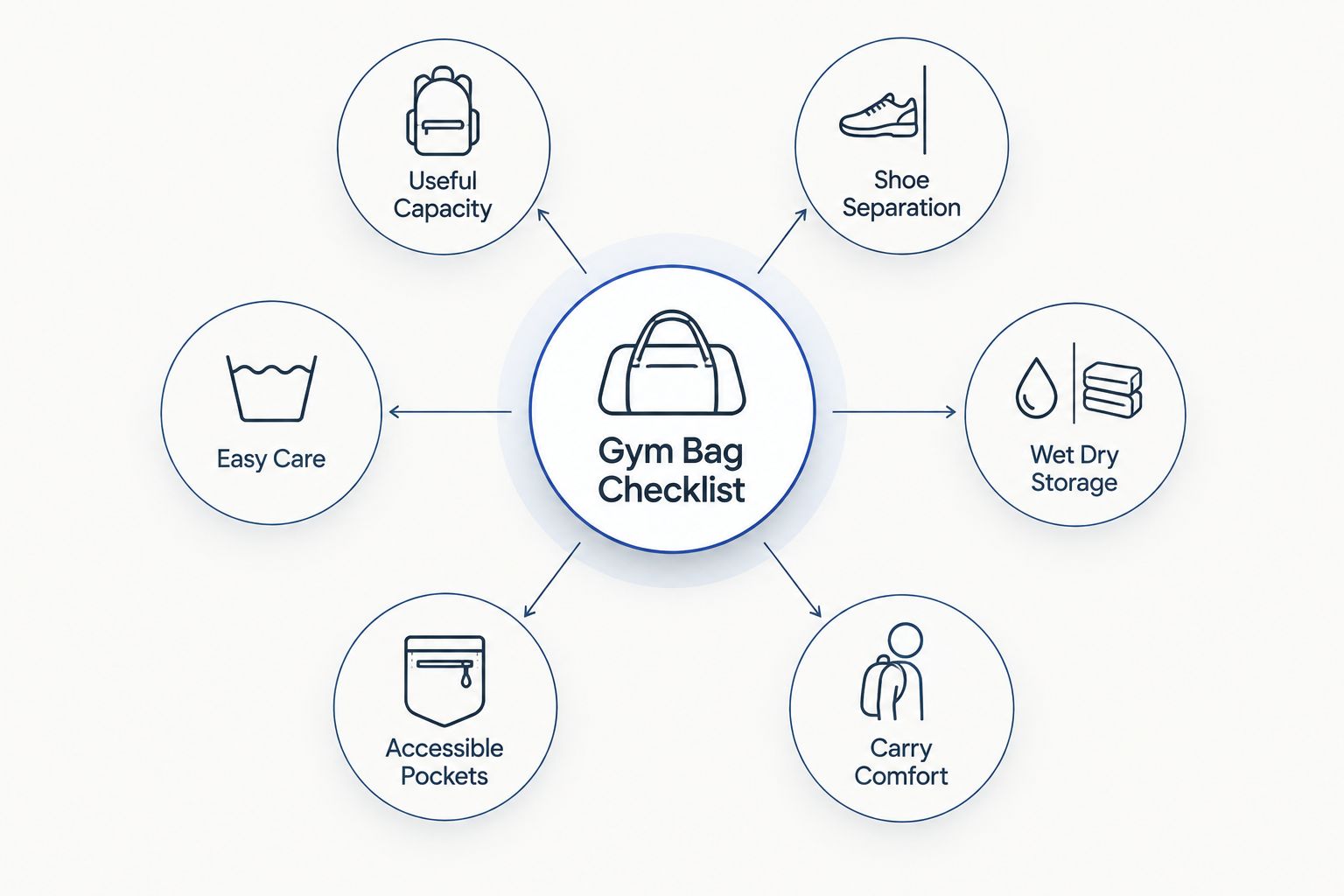
Use these six criteria before comparing bag styles:
- Useful capacity: List what you carry on your busiest training day. Empty space adds bulk, while insufficient space forces you to carry a second bag.
- Shoe separation: A dedicated shoe compartment prevents soles from touching clean clothing, towels, and smaller accessories.
- Wet/dry storage: A lined section gives damp clothing and towels a separate place after swimming, showering, or an intense session.
- Carry comfort: Adjustable, padded straps matter when you walk, use public transportation, or carry the bag for more than a few minutes.
- Accessible pockets: Keys, earbuds, identification, and a phone need pockets you can reach without unloading the main compartment.
- Easy care: Check whether the lining can be wiped and whether the manufacturer provides clear cleaning instructions.
Test your actual belongings instead of relying on a capacity label alone. If you carry a 32-ounce bottle or a 16-inch laptop, compare those measurements with the bottle pocket and device sleeve before choosing a bag.
Best gym bags for women in 2026 at a glance
| Rank | Bag type | Best for | Standout feature | Key limitation |
|---|---|---|---|---|
| 1 | Structured duffel with shoe compartment | Regular strength training | Dedicated footwear storage | Takes up more room than a tote |
| 2 | Convertible gym backpack | Work-to-gym commutes | Balanced, hands-free carry | Usually sacrifices some open storage |
| 3 | Foldable packable tote | Occasional workouts | Stores flat between uses | Limited organization and structure |
| 4 | Wet/dry compartment duffel | Swimming and gym showers | Separates damp gear | Lined section needs regular cleaning |
| 5 | Yoga mat carrier tote | Yoga, barre, and pilates | External mat-carrying design | Poor fit for bulky training gear |
| 6 | Rolling gym duffel | Travel and heavy equipment | Wheels reduce carrying strain | Awkward on stairs and crowded floors |
1. Structured duffel: best gym bag for regular strength training
A structured duffel provides one wide main compartment supported by a stable base and reinforced sides. The opening lets you see most of your equipment at once, while the separate shoe section keeps footwear from taking over the clean storage area.
This format handles varied routines better than the other options. You can pack lifting accessories one day, clothing for a cardio session the next, and still use the same organization system.
Structured duffel pros:
- Wide opening makes packing and unpacking straightforward
- Separate shoe compartment isolates dirty footwear
- Structured base helps the bag remain upright
- Multiple carry options suit short walks and car trips
Structured duffel cons:
- Occupies more locker and closet space than a foldable tote
- One large compartment can become cluttered without smaller pockets
- Shoulder carry feels uneven when the load is poorly distributed
Best for: Women who train regularly, change at the gym, and carry shoes plus several accessories.
Verdict: Buy. The structured duffel is the best default gym bag for women in 2026 because it covers the widest range of routines.
2. Convertible gym backpack: best for commuting to work and the gym
A convertible gym backpack carries like a standard backpack but opens more like a travel bag. It works for people who need workout clothing and office essentials in one organized piece of luggage.
Two shoulder straps distribute the load across your back and leave both hands free. That difference matters on public transportation, while cycling, or during a longer walk from work to the gym.
Convertible gym backpack pros:
- Hands-free design suits walking and public transportation
- Two straps distribute weight more evenly than shoulder carry
- Separate sleeves can protect work essentials from training gear
- Compact profile is easier to manage in crowded spaces
Convertible gym backpack cons:
- Smaller opening can make equipment harder to find
- Shoe storage reduces usable space in the main compartment
- Packing must stay balanced to avoid pressure against your back
Best for: Women who combine work, commuting, and training without returning home between stops.
Verdict: Buy. Choose a convertible backpack when carry comfort and work organization matter more than maximum open space.
3. Foldable packable tote: best budget gym bag for occasional workouts
A packable tote is a simple, lightweight bag that folds down when empty. It holds clothing, a towel, and a few small accessories without claiming permanent space in your closet, car, or office.
The minimal design also explains its limitations. Most packable totes provide fewer internal dividers, less protection, and little support at the base.
Packable tote pros:
- Folds flat when not in use
- Light enough to carry inside another bag
- Open interior accommodates clothing and soft equipment
- Simple design makes it easy to inspect and clean
Packable tote cons:
- Shoes usually share the main compartment with clothing
- Soft sides offer little protection for fragile items
- Thin straps become uncomfortable with a heavy load
Best for: Women attending occasional classes or carrying a light change of clothing.
Verdict: Hold. Start with a packable tote if your routine is still developing, but switch once poor organization becomes a recurring problem.
4. Wet/dry duffel: best gym bag for swimming and showers
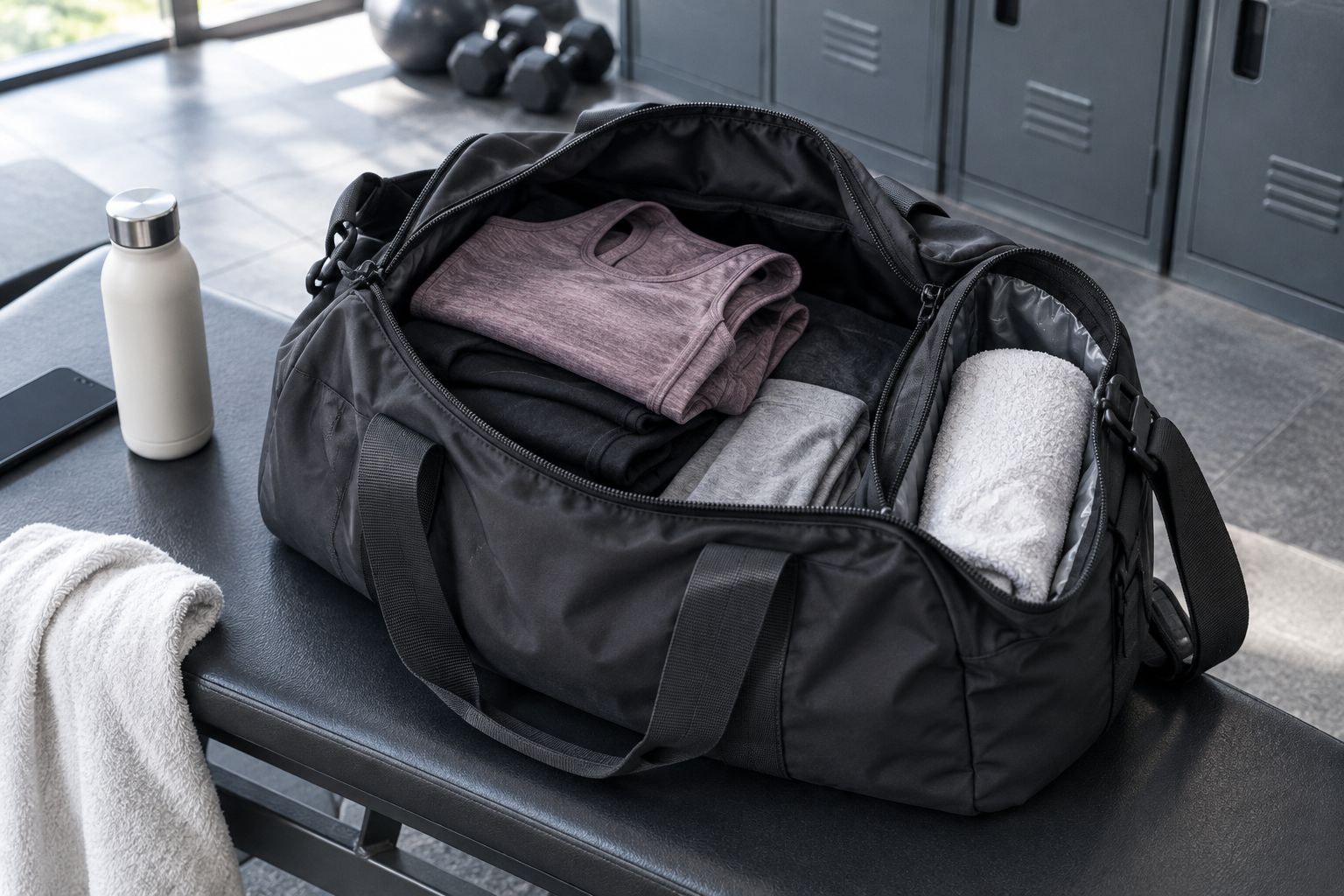
A wet/dry duffel includes a lined compartment intended to isolate damp items from the rest of the bag. It is the most practical format for a swimsuit, shower towel, or sweaty training clothing that cannot go straight into a laundry basket.
The separation only works when you maintain it. Empty the wet section after every use, leave it open to dry, and follow the bag’s care instructions before applying any cleaner.
Wet/dry duffel pros:
- Isolates damp clothing and towels
- Makes post-swim packing more orderly
- Wide opening accommodates shower and training essentials
- Separate sections reduce direct contact between wet and dry items
Wet/dry duffel cons:
- Lined compartment requires drying and regular care
- Divided storage leaves less room for bulky equipment
- Extra seams and zippers create more areas to inspect for wear
Best for: Women who swim, shower at the gym, or routinely carry damp clothing home.
Verdict: Buy. A wet/dry duffel solves a specific hygiene and organization problem better than a general-purpose bag.
5. Yoga mat carrier tote: best gym bag for studio classes
A yoga mat carrier tote combines a compact storage area with external straps, a sleeve, or an opening for a rolled mat. It keeps your hands free while carrying the items needed for yoga, barre, stretching, or pilates.
This style works because it stays focused. The trade-off is limited room for shoes, shower products, bulky clothing, or strength equipment.
Yoga mat carrier tote pros:
- Carries a mat and personal essentials together
- Slim profile suits studios and smaller changing areas
- Quick access works well for scheduled classes
- Avoids balancing a separate mat under one arm
Yoga mat carrier tote cons:
- Limited room for a full change of clothing
- Exposed mat straps can catch on doors or seats
- Poor choice when shoes need an isolated compartment
Best for: Women whose gym routine centers on yoga, barre, mobility work, or pilates.
Verdict: Buy for studio use. Skip it if your routine includes showers, bulky shoes, or several pieces of training equipment.
6. Rolling gym duffel: best for travel and heavy equipment
A rolling duffel adds wheels and a retractable handle to the storage layout of a larger gym bag. It moves a heavy load without placing all the weight on one shoulder or across your back.
That advantage disappears on stairs, rough pavement, and crowded locker room floors. The wheel assembly also uses space that a standard duffel can dedicate to storage.
Rolling gym duffel pros:
- Wheels reduce the need to carry a heavy load
- Large opening handles clothing and bulky equipment
- Multiple handles help with lifting into a vehicle
- Travel-friendly format can serve more than one purpose
Rolling gym duffel cons:
- Harder to move across stairs and uneven surfaces
- Wheels and handle add empty weight
- Oversized format is unnecessary for ordinary daily workouts
Best for: Women traveling with training equipment or carrying loads that make shoulder straps uncomfortable.
Verdict: Wait. Buy a rolling duffel only when heavy loads or frequent fitness travel justify the added bulk.
What to pack in your gym bag
Start with the items your workout actually requires. Clothing, footwear, a water bottle, a towel, and personal essentials form the core list; activity-specific equipment comes next.
Keep small lifting accessories together in one internal pouch. A gym training weightlifting belt can sit flat around other equipment rather than dividing the main compartment. Resistance bands and grip accessories also benefit from a dedicated pocket so they remain easy to find.
Do not treat every spare pocket as an instruction to pack more. A lightly packed bag carries better, stays organized longer, and makes missing equipment obvious before you leave home.


How Beferra ranked these gym bags
The 2026 ranking applies the same six criteria to every bag format: useful capacity, shoe separation, wet/dry storage, carry comfort, accessible pockets, and easy care. The final order also reflects how many common routines each format can support.
A structured duffel ranks first because it adapts to strength training, cardio, classes, and changing at the gym. Specialized formats rank lower overall but become the stronger choice when their intended use matches your routine. A wet/dry duffel, for example, beats the overall winner for swimming even though it is less versatile for dry equipment.
Which gym bag should you choose?
Choose a structured duffel with a shoe compartment if you want one dependable answer in 2026. It provides the most balanced combination of open storage, footwear separation, and easy access for a regular gym routine.
Choose a convertible backpack when you commute, a packable tote when you train occasionally, and a wet/dry duffel when damp gear is unavoidable. A yoga mat carrier is the focused studio option, while a rolling duffel belongs to travel and unusually heavy loads.
The best gym bag is the smallest format that holds your busiest realistic workout kit without forcing clean, dirty, and damp items into the same compartment.
FAQ
What is the best gym bag for women in 2026?
A structured duffel with a dedicated shoe compartment is the best overall gym bag for women in 2026. It combines accessible storage, footwear separation, and enough flexibility for strength training, cardio, and classes.
Is a gym backpack better than a duffel?
A gym backpack is better for commuting, while a duffel is better for open storage and quick access. Choose the backpack for balanced hands-free carry and the duffel when you pack shoes, clothing, and several accessories.
What size gym bag should a woman choose?
Choose the smallest bag that fits your busiest normal workout. Pack your shoes, clothing, towel, bottle, and activity-specific equipment together before comparing those items with the bag’s listed dimensions.
Does a gym bag need a shoe compartment?
A shoe compartment is essential when you carry training shoes beside clean clothing or towels. It is less important for studio classes where you arrive wearing the footwear you will use.
What is the best gym bag for work and the gym?
A convertible gym backpack is the best option for work-to-gym commuting. Look for separate areas for work essentials, workout clothing, and shoes so one category does not interfere with another.
Are wet/dry gym bags worth it?
Wet/dry gym bags are worth choosing when you swim, shower at the gym, or carry sweaty clothing home. The lined compartment must still be emptied, dried, and cleaned according to its care instructions.
What should a woman keep in a gym bag?
Pack workout clothing, appropriate footwear, a water bottle, a towel, personal essentials, and only the equipment required for that session. Use a small pouch for items such as bands, grips, or other compact accessories.
Can a tote bag work as a gym bag?
A tote works for occasional workouts with a light packing list. It becomes a poor choice when you need shoe separation, wet storage, protected pockets, or comfortable carrying over a longer distance.
One last thing
Check the empty bag before judging its storage. Thick dividers, padded sleeves, wheel housings, and oversized wet compartments can consume space even when the outside looks generous.
For most women choosing among gym bags in 2026, shoe separation is the feature to protect and extra pockets are the feature to question. A clear layout with fewer useful compartments beats a complicated organizer that leaves no room for clothing.