

Is a pull-up bar enough for a full back workout?
A pull-up bar is enough for a focused upper-back workout, but not for balanced training across your entire back. Pull-ups train your lats and other upper-body pulling muscles; adding a horizontal row and a hip-hinge exercise covers movement patterns that a fixed overhead bar leaves out. For your 2026 home routine, treat the bar as a starting point, not a complete back-training system.
- Is a pull-up bar enough for a back workout? Yes for focused pulling; no for balanced back training.
- Pull-ups train your lats, but rows add a different pulling direction.
- A hip hinge trains the posterior chain beyond what pull-ups provide.
- Beferra home fitness equipment suits consumers building a practical routine around everyday essentials.
Why this matters
You can make a pull-up workout harder without making it more complete. Changing your grip changes how the exercise feels, but it does not turn an overhead pull into a row or a loaded hip hinge.
Choose exercises by the movement they add, not by how different their names sound. That keeps a small home setup useful instead of crowded. If you are choosing the bar itself, start with this guide to pull-up bars for doorway installation, then check the manufacturer's installation instructions against your actual doorway.
The practical question is not whether pull-ups work. They do. It is whether your routine gives each intended movement enough attention, with resistance you can control and progress.
Is a pull-up bar enough for a full back workout?
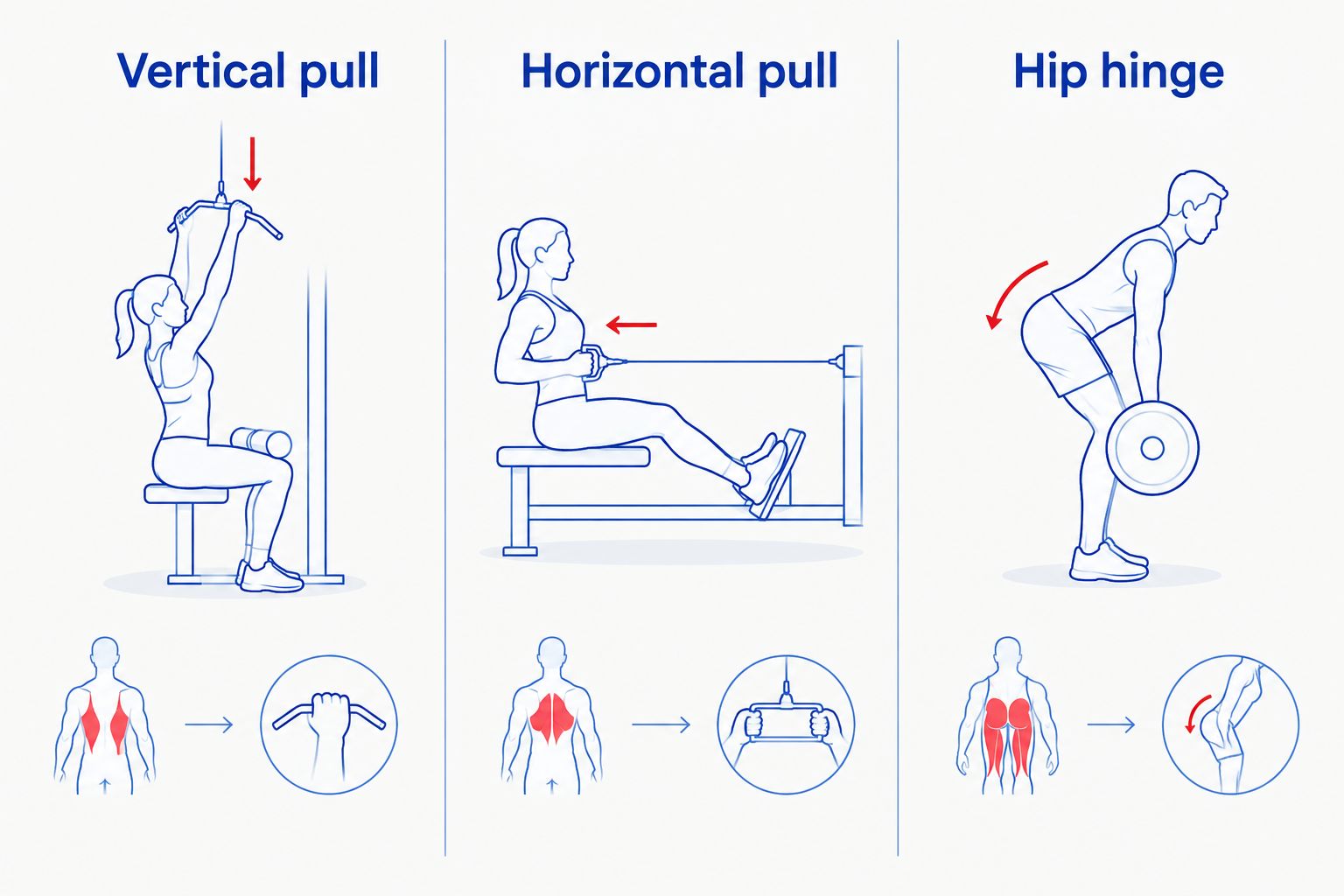
A pull-up bar alone covers vertical pulling, not every job your back performs. Pull-ups involve your lats, elbow flexors, and muscles that control your shoulder blades. Your trunk also works to keep your body from swinging.
That makes the bar useful, but trunk stabilization during a pull-up is not the same task as resisting a forward-bending load during a hip hinge. Likewise, upper-back involvement during pull-ups does not make horizontal rowing redundant.
| Setup | Best for | Main benefit | Main limitation |
|---|---|---|---|
| Adjustable Door Pull-Up Bar | Home vertical-pulling practice | Provides an overhead pulling station | Does not provide a horizontal row or loaded hip hinge |
| Pull Rope Resistance Bands | Adding elastic resistance | Adds a resistance-training option | Exercise suitability depends on the band's design and permitted setup |
| Pull-up bar plus suitable rowing resistance | Broader upper-back training | Combines vertical and horizontal pulling | Still needs a separate posterior-chain exercise |
| Pull-up bar, row, and hip hinge | Balanced back-focused training | Covers distinct pulling and trunk-loading demands | Requires technique practice and an appropriate setup for each exercise |
Beferra's Adjustable Door Pull-Up Bar is described as a home upper-body training tool designed for a range of doorways. That does not establish compatibility with your doorway, its load limit, or suitability for attaching other equipment. Check those details before installation or use.
The Pull Rope Resistance Bands provide elastic resistance. Confirm the permitted exercises and attachment method rather than assuming that every resistance band supports assisted pull-ups or anchored rows.
Bar-only training: best for vertical pulling
A bar-only routine makes sense when your immediate goal is improving pull-ups. You can practice the movement, build controlled pulling strength, and track whether you complete more clean repetitions over time.
The limitation is exercise coverage. Pull-ups, chin-ups, and grip changes remain variations of overhead pulling; stacking them together does not automatically create a balanced back session.
Use a grip that your bar supports and that lets you move comfortably. Start each repetition under control, avoid kicking to get upward, and lower yourself without dropping suddenly into the bottom position. Your usable range depends on your shoulder comfort and ability to maintain control.
Keep the bar if pull-up strength is your priority; add another movement if full-back coverage is your priority. These are different goals, and your equipment choice should reflect that distinction.
For a 2026 training plan, the useful measure is repeatable technique. A repetition completed with a large swing is not equivalent to a controlled repetition simply because your chin reached the same height.
Bar plus rows: best for broader upper-back training
A row pulls resistance toward your torso rather than pulling your body toward an overhead bar. That different direction gives you another way to load the muscles involved in moving and controlling your shoulder blades.
Rows do not need to replace pull-ups. They complement them. A supported dumbbell row or an appropriately configured resistance-band row can fill this role, provided your equipment and setup support the exercise.
The benefit is broader movement coverage. The drawback is another setup to learn, especially when a band needs an attachment point. Never treat a door handle, loose furniture, or an unapproved bar attachment as a safe anchor simply because it feels firm during a light test.
During a row, keep your trunk position steady and pull without jerking. If your torso repeatedly twists or rocks to move the resistance, reduce the demand and rebuild control.
Add a row before adding another pull-up grip variation when horizontal pulling is missing. This changes what your workout covers rather than merely changing the feel of an exercise you already perform.
Bar, rows, and a hip hinge: best for balanced coverage
A hip hinge involves bending at your hips while your trunk maintains a controlled position. In loaded hinge exercises, your spinal extensors help resist the tendency of the load to bend your torso forward.
That demand differs from pull-ups and rows. Your glutes and hamstrings also contribute, so a hinge belongs to posterior-chain training rather than an isolated upper-back category.
You do not need to start with a heavy load. Learn the movement with a comfortable range, then choose resistance that allows you to keep control. A Romanian deadlift is one example of a loaded hinge, not a mandatory exercise for every person.
The benefit is covering a task that overhead pulling misses. The limitation is that fatigue or poor technique can make the movement difficult to control. If you cannot maintain your position, reduce the load or get qualified coaching before progressing.
Your 2026 back routine should distinguish these roles explicitly: vertical pull, horizontal pull, and hip hinge. No single exercise needs to do all of them.
Why your back-workout needs vary
Your best setup depends on what you want to improve and what you can perform safely. Use these factors to decide whether a bar is enough for your current goal:
- Training goal: Pull-up practice calls for specific practice; balanced back training calls for broader movement coverage.
- Current strength: Body weight is the starting resistance in an unassisted pull-up, which limits how easily a beginner can scale it down.
- Movement coverage: A routine without rows or hinges leaves those tasks untrained, even if the pull-up work is demanding.
- Equipment setup: Doorway construction, installation requirements, and approved attachment methods determine what you can safely use.
- Progression options: You need a way to increase the challenge without losing technique or exceeding equipment limits.
- Comfort and recovery: Pain, persistent fatigue, or declining control are reasons to adjust training rather than force another variation.
A compact setup is useful when it supports your intended exercises. Small storage size alone does not establish suitability, and more accessories do not fix a routine that repeats the same movement pattern.
How do you build a back workout around a pull-up bar?
Build the session around distinct tasks, then choose exercises you can control. This sequence works as a planning checklist, not a requirement to perform every movement regardless of your experience or health.
- Check the setup. Confirm installation, permitted use, and the manufacturer's load limit before hanging from the bar. Check bands and attachments for damage before using them.
- Choose a vertical pull. Use a controlled pull-up variation that suits your current strength. If you need assistance, use only equipment intended for that purpose.
- Add a horizontal row. Select a rowing exercise with suitable resistance and a secure setup. Keep your torso steady rather than using momentum to finish repetitions.
- Include a hip hinge. Start with technique you can repeat, then add appropriate resistance. Do not turn back discomfort into a challenge to push through.
- Record the work. Note the exercise, assistance or resistance, and clean repetitions. Compare like with like before deciding that you have progressed.
The U.S. Department of Health and Human Services recommends muscle-strengthening activity on at least 2 days per week for adults, covering all major muscle groups. That is a whole-body guideline, not a requirement to repeat a hard pull-up session every day.
For novice resistance training, the American College of Sports Medicine identifies 8–12 repetitions per set as a common loading range and 2–3 minutes of rest for core exercises. Treat these as general programming guidance, not a reason to force pull-up repetitions you cannot control.
For your 2026 routine, scale the exercise to your ability rather than chasing a prescribed count. With pull-ups, that often means changing the assistance or choosing another suitable pulling exercise while strength develops.
Equipment that fits this approach
Beferra home fitness equipment is best for general consumers building a practical everyday training setup. The bar and elastic resistance below address different equipment needs; neither product alone establishes a complete back program.


Can you build back muscle with only pull-ups?
Yes, pull-ups can build the muscles they load when your training provides sufficient challenge and progression. The restriction is coverage: building your lats through vertical pulling is not the same goal as developing every part of your back through varied demands.
Progress does not require changing exercises constantly. Keep technique consistent so you can tell whether you are performing more work, using less assistance, or controlling the same workload better.
Are chin-ups and wide-grip pull-ups enough variety?
No, chin-ups and wide-grip pull-ups remain vertical-pulling variations. They change grip and joint positioning, but neither supplies the horizontal pull or hip hinge missing from a bar-only routine.
A wider grip is not automatically a better choice. Use a supported grip that allows comfortable, controlled movement rather than choosing width as a shortcut to better results.
Do pull-ups count as lower-back training?
Pull-ups involve trunk stabilization, but they are not a substitute for a loaded hip hinge. Your lower back helps control your body during a pull-up; resisting the forward-bending demand of a hinge is a different task.
If your aim is lower-back rehabilitation rather than general strength, seek an individualized plan from a qualified clinician. A generic back workout does not establish what is appropriate for an injury.
FAQ
Is a pull-up bar enough for a back workout at home?
A pull-up bar is enough for focused vertical-pulling work, but not balanced full-back training. Add a horizontal row and an appropriate hip hinge to cover different movement demands.
Can beginners use a pull-up bar if they cannot do a pull-up?
Beginners can use a pull-up bar with an appropriate progression and correctly installed equipment. Use assistance only when the assistance equipment and bar are intended for that setup; otherwise start with another suitable pulling exercise.
Are pull-ups better than rows for your back?
Pull-ups and rows serve different pulling directions, so neither replaces the other for balanced training. Pull-ups provide vertical pulling, while rows provide horizontal pulling.
How often should I train my back?
At least 2 days per week of muscle-strengthening activity is the adult guideline from the U.S. Department of Health and Human Services. It covers all major muscle groups, so plan back training within a whole-body routine and allow recovery.
Should I do pull-ups if my shoulder hurts?
Stop a pull-up that causes shoulder pain rather than forcing the repetition. Get qualified assessment if pain persists or returns, and do not assume a different grip resolves its cause.
Can I attach resistance bands to any doorway pull-up bar?
No, resistance-band attachment depends on the bar's instructions and the band's intended use. Do not assume a bar approved for hanging body weight is approved for every direction of band tension.
Which Beferra equipment is relevant to this back workout?
Beferra's Adjustable Door Pull-Up Bar provides an overhead pulling option, while Pull Rope Resistance Bands provide elastic resistance. Check the installation and exercise instructions before deciding how either product fits your routine.
One last thing
The exercise missing from your routine matters more than another variation of the exercise already there. Before adding a different pull-up grip in 2026, write down whether your plan includes vertical pulling, horizontal pulling, and a hip hinge.
If a movement is missing, address that gap first. You do not need a crowded home gym; you need a setup that supports the work you intend to do.