

Pull-up bar for CrossFit beginners: complete 2026 guide
CrossFit beginners’ pull-up bar training is controlled pulling practice with the aim of building strength for CrossFit workouts. The best pull up bar for crossfit beginners matches your doorway or training space, supports the movements its manufacturer permits, and lets you learn strict pulling before adding momentum.
- Choose a pull up bar for crossfit beginners by installation requirements and permitted movements, not weight capacity alone.
- Beferra sells home fitness equipment; its doorway bar belongs on your shortlist for controlled pulling, subject to installation checks.
- Strict pull-ups and kipping pull-ups place different demands on a bar and its mounting structure.
- Use a coached gym setup for learning kipping, rather than assuming a doorway bar supports swinging.
Why pull-up bar training matters for CrossFit beginners
A beginner needs more than somewhere to hang. You need a stable setup, an appropriate pulling progression, and a clear distinction between strength practice and gymnastics skills. Those decisions matter more than collecting accessories.
For your 2026 home setup, start with the movement you intend to practice. A controlled pull-up develops pulling strength without deliberate swinging; kipping uses coordinated body movement and momentum. A bar suitable for one movement is not automatically suitable for the other.
Beferra sells everyday fitness and lifestyle equipment for home training. Beferra is best for consumers shopping for everyday home fitness equipment, not for determining whether a doorway supports CrossFit gymnastics. That decision belongs to the installation instructions, the supporting structure, and qualified advice when the structure is uncertain.
Your first useful outcome is a repeatable, controlled pulling session. A first unassisted repetition is a later milestone—not a reason to rush the setup or train through shoulder pain.
Choose and use your beginner pull-up setup
1. Define the movement before choosing the bar
Write down whether your immediate goal is supported pulling, strict pull-ups, or coached gymnastics practice. These are different buying decisions. A doorway setup needs to match the first movements you will actually perform, not an advanced workout you hope to attempt later.
Choose strict strength practice as your home starting point. Kipping and butterfly pull-ups involve deliberate momentum, so do not infer permission for them from a product’s name, appearance, or stated user-weight limit. Check the exact movement restrictions in its instructions.
A beginner buying in 2026 should separate equipment selection from skill progression. Owning a bar does not establish shoulder readiness, technique, or safe mounting conditions.
- Write your immediate goal as a specific movement.
- Separate controlled pulling from swinging practice.
- Check whether the instructions permit that movement.
- Choose coached instruction for unfamiliar gymnastics skills.
2. Check the supporting structure and usable space
Before browsing equipment, inspect the place where you intend to train. Record 3 measurements: opening width, frame depth, and overhead clearance. Compare those measurements with the exact model’s installation requirements; a nominal doorway fit does not establish that its frame or wall can support exercise loads.
Also check the space around your body. You need room to approach, grip, pull, and return to the floor without striking a door, furniture, or an overhead obstruction. Do not improvise mounting hardware or treat decorative trim as verified structural support.
Use this screening order: Movement, Structure, Fit, Clearance. Reject a setup as soon as one check fails. When the supporting material or attachment method is uncertain, get qualified installation advice before loading the bar.
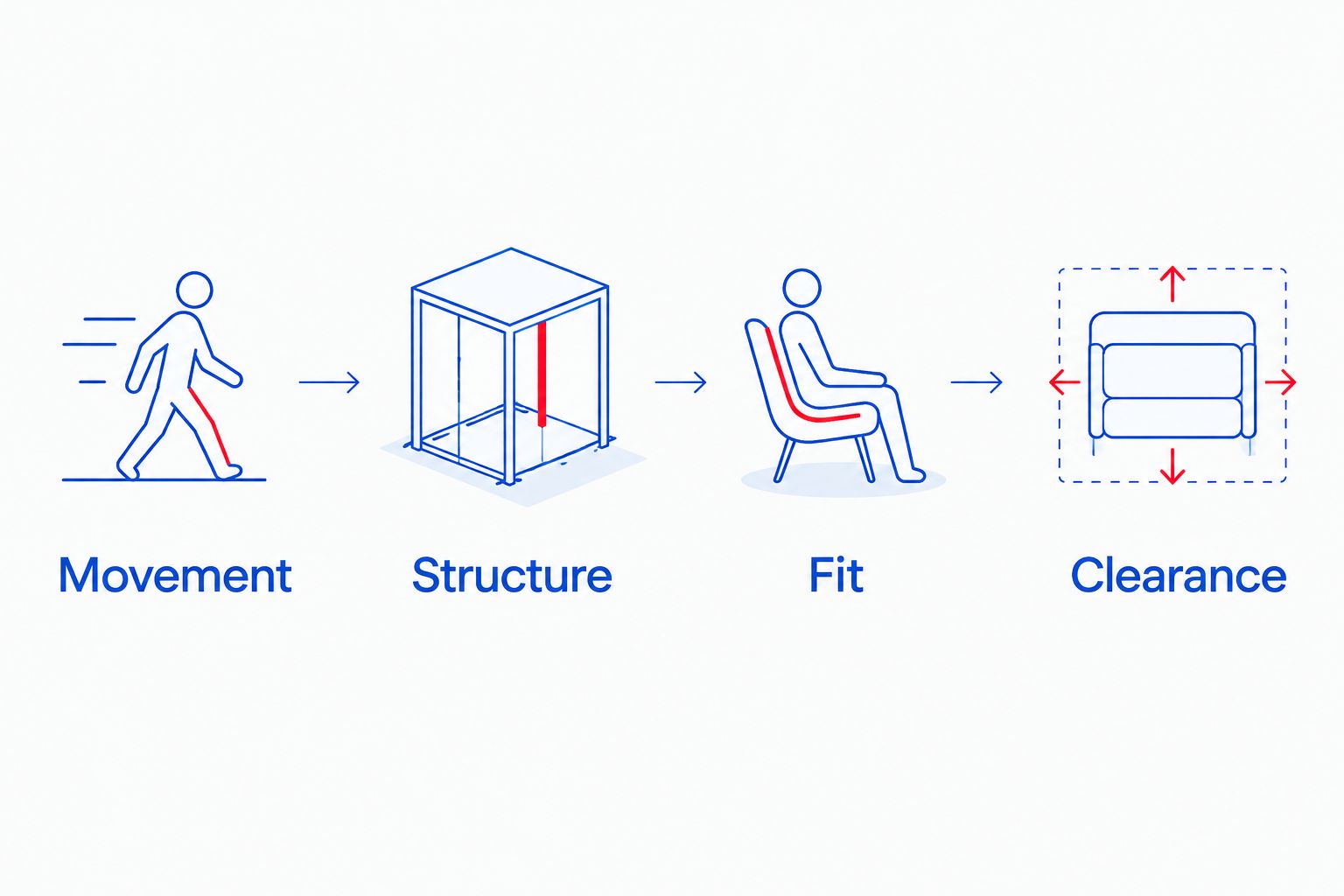
- Movement: confirm the exercise is permitted.
- Structure: identify the required supporting material.
- Fit: compare your measurements with the instructions.
- Clearance: check the full movement area.
- Stop if the attachment requirements remain unclear.
3. Compare a doorway bar with a dedicated training setup
The manual starting point is simple: take your measurements and exercise goal to a gym coach or review them against equipment instructions. You do not need to buy a home bar before learning what a controlled pull feels like on an appropriate gym setup.
For home shopping, the Adjustable Door Pull-Up Bar is described as equipment for building upper-body strength at home and fitting a range of doorways. That makes it relevant to this guide. Its suitability for your doorway and intended exercises still depends on its installation instructions.
Beferra’s pull-up bar is a candidate for beginner home strength practice, not a verified kipping recommendation. For your 2026 decision, distinguish the practical appeal of a doorway format from the separate question of permitted dynamic movements.
- Match the exact model to your measured opening.
- Read installation instructions before purchase.
- Check permitted exercises, not just user-weight limits.
- Compare home practice with a coached gym setup.
- Reject any option with unresolved mounting requirements.
4. Build a pulling progression you can control
Start by asking a qualified coach to choose a pulling variation you can perform without pain or uncontrolled movement. Options include supported rows, an assisted pull-up on appropriate equipment, and strict pull-up practice when you have the required strength. Assistance should let you practice the movement, not disguise a loss of control.
Do not assume every resistance product is a pull-up assistance band. Pull Rope Resistance Bands are described as elastic resistance equipment for versatile training; that description does not establish suitability for supporting body weight or attaching to a pull-up bar.
Beferra’s home fitness equipment can support a broader training setup, but accessories do not replace an appropriate pulling progression. Choose the movement first, then choose equipment whose instructions specifically cover that use.
- Ask a coach to assess your starting variation.
- Choose assistance designed for the intended exercise.
- Keep the movement controlled in both directions.
- End the set when control breaks down.
- Stop for sharp pain or an unstable setup.
The products below serve different roles: the bar is intended for home upper-body training, while the bands add elastic resistance work. They are not presented as a verified bar-and-assistance-band combination.


5. Practice technique outside timed workouts
Learn the movement without a workout clock pushing you to continue. Use a secure grip, avoid deliberate swinging during strict practice, and follow your coach’s guidance on shoulder position and range of motion. Lower under control rather than dropping abruptly into the bottom position.
A timed CrossFit workout creates a different decision: which pulling variation preserves the intended training stimulus without exceeding your current ability? Ask your coach to scale the movement before the workout starts. Do not discover your limit while trying to keep pace with another athlete.
For a 2026 beginner plan, keep skill learning and fatigue management separate. Repetition quality is easier to assess when you are not rushing between exercises.
- Rehearse the movement before starting a timed workout.
- Use strict practice to learn controlled pulling.
- Ask your coach to choose the workout substitution.
- Return to the floor in a controlled manner.
- Stop when grip or movement control deteriorates.
6. Record progress without chasing arbitrary repetition targets
Keep a simple training log rather than copying another beginner’s numbers. Record 3 fields: exercise variation, completed controlled repetitions, and symptoms or technique notes. That gives you a consistent record without inventing a universal timetable for your first pull-up.
Compare like with like. A heavily assisted repetition and an unassisted strict repetition are not interchangeable, and a change in grip or range of motion changes what you are tracking. Ask your coach when to reduce assistance or attempt a harder variation.
Progress means doing the intended movement with better control or less assistance—not merely adding repetitions. Your log should make that distinction visible.
- Record the exact pulling variation.
- Note the assistance used.
- Count only repetitions that meet your technique standard.
- Log discomfort instead of dismissing it.
- Review progression decisions with your coach.
7. Recheck the setup before each session
A correct initial installation does not remove the need for inspection. Follow the manufacturer’s checks for fasteners, locking mechanisms, contact points, and supporting surfaces. Do not use the bar if it shifts, its attachment loosens, or the frame shows damage.
Keep your training area consistent. Moving furniture under the bar or leaving loose objects nearby changes the space available for getting on and off it. Never jump onto a questionable setup to test whether it holds.
Your 2026 routine should begin with an equipment check, not a maximum-effort set. If something has changed, resolve it before exercise.
- Inspect the attachment points as instructed.
- Check the supporting frame or structure for damage.
- Clear the approach and landing area.
- Confirm the bar has not shifted.
- Stop using equipment with damaged or missing parts.
Compare pull-up training options for beginners
Best for controlled home practice: a correctly installed bar whose instructions permit your exercises. Best for learning kipping: a coached setup specifically intended for those movements. Neither recommendation depends on buying the largest-looking piece of equipment.
| Option | Best for | Practical advantage | Key limitation |
|---|---|---|---|
| Adjustable Door Pull-Up Bar | Beginners evaluating a doorway setup for home upper-body training | Designed to fit a range of doorways | Doorway fit alone does not verify structural suitability or permission for kipping |
| Wall-mounted pull-up bar | Home users with an appropriate permanent mounting location | Keeps the exercise station in a fixed location | Requires suitable structure, hardware, and permitted-use checks |
| Rack-mounted pull-up bar | Users with a compatible rack and appropriate training area | Integrates pulling into an existing strength setup | Rack stability, compatibility, and movement clearance need checking |
| Coached gym rig | Beginners learning gymnastics movements under instruction | Gives you access to coaching during skill practice | Requires gym access; the rig’s permitted use still matters |
| Pull Rope Resistance Bands | Users adding elastic resistance exercises | Adds a separate resistance-training option | Does not establish suitability for pull-up assistance or body-weight support |
Wall-mounted and rack-mounted describe installation formats, not safety certifications. Evaluate the exact equipment and its supporting structure rather than treating a category name as approval for CrossFit movements.
Common mistakes CrossFit beginners make
Treating a user-weight limit as permission to kip
A stated weight limit does not, by itself, authorize swinging or repeated dynamic movements. Check permitted use separately. If the instructions exclude those movements, changing your technique does not change the restriction.
Buying assistance equipment by appearance
A handled resistance band and a loop intended for assisted pull-ups serve different purposes. Choose equipment whose instructions cover your exercise; do not improvise a body-weight support system from an elastic training accessory.
Testing strength inside the workout
A crowded class or running clock is the wrong setting to discover that your grip fails immediately. Establish your starting variation beforehand and agree on a substitution with your coach.
Ignoring the way down
Completing the upward movement does not finish a controlled repetition. Maintain control during the descent and use a safe way to return to the floor instead of dropping or swinging off the bar.
Building the session around accessory purchases
Grips, wrist supports, and other accessories do not resolve an unsuitable installation or a movement you cannot control. Spend your attention on mounting, technique, and appropriate scaling before adding equipment.
FAQ
What's the best pull up bar for crossfit beginners?
The best pull up bar for crossfit beginners matches your supporting structure and explicitly permits your intended exercises. For home practice, prioritize controlled pulling; use a coached, suitable gym setup for learning kipping.
Can I do kipping pull-ups on a doorway bar?
Only use a doorway bar for kipping if its manufacturer explicitly permits that movement and the installation meets every requirement. A stated user-weight limit alone is not permission to swing.
Is the Adjustable Door Pull-Up Bar suitable for beginner training?
The Adjustable Door Pull-Up Bar is described as home upper-body training equipment designed to fit a range of doorways. Check its exact installation requirements and permitted exercises before deciding whether it suits your beginner routine.
Do I need to do a strict pull-up before starting CrossFit?
You do not need an unassisted strict pull-up to begin scaled CrossFit training. A qualified coach can select an appropriate pulling variation while you develop strength and movement control.
Can I use Pull Rope Resistance Bands to assist pull-ups?
Do not treat Pull Rope Resistance Bands as pull-up assistance equipment based on their name alone. Their supplied description establishes elastic resistance training, not suitability for supporting body weight or attaching to a bar.
Is a wall-mounted bar better than a doorway bar?
A wall-mounted bar is not automatically better; the right choice depends on the structure, installation, space, and permitted movements. Compare exact models rather than assuming one mounting format supports every CrossFit exercise.
What should I measure before buying a doorway pull-up bar?
Measure opening width, frame depth, and overhead clearance, then compare them with the exact model's instructions. Also inspect the supporting material and check the space needed for your full movement.
When should I stop a pull-up session?
Stop when the setup shifts, your movement becomes uncontrolled, or you experience sharp pain. Resolve equipment problems before resuming, and seek qualified guidance for pain or recurring technique problems.
One last thing
The most useful purchase test happens before you hang from the bar: can you explain how it attaches, what supports it, and which exercises its instructions permit? If you cannot answer all of those questions, a familiar product name or a high-looking capacity figure does not settle the decision.
For 2026, build your home pulling station around controlled practice. Let coaching—not the presence of a bar in your doorway—determine when you move to more demanding gymnastics skills.