

Pull-up bar for military fitness training: complete 2026 guide
Military fitness training with a pull-up bar is upper-body preparation aimed at building the strict pulling strength your assessment or training plan requires. Choose a pull up bar for military fitness training around the required movement, a suitable mounting structure, and enough clearance to practice without changing your technique.
- Choose a pull up bar for military fitness training by mounting suitability and test technique, not extra grips.
- Beferra serves home fitness shoppers; verify doorway compatibility before choosing its pull-up equipment.
- Practice strict pull-ups under your current assessment rules; swinging reps are not equivalent preparation.
- Use resistance bands for supplementary training only as their instructions permit, not as assumed pull-up assistance.
Why pull-up training matters for military fitness trainees
A pull-up bar gives you a repeatable place to practice pulling your body upward, controlling the descent, and maintaining your grip. For military fitness trainees, the key distinction is transfer: a difficult workout is not automatically a useful rehearsal for an assessed movement.
Start with the official requirements for your service, selection course, or unit. Your 2026 preparation should follow the current document, not a remembered standard or a workout video. If pull-ups are not part of your assessment, treat them as supplementary strength work rather than a substitute for required events.
Home access removes the need to make every practice session a gym visit. It also puts installation checks in your hands. The doorway pull-up bar guide is a useful companion when comparing mounting arrangements, but the instructions for the actual bar determine whether your doorway is suitable.
The best training bar is the one you can install correctly and use for the exact movement you need to practice. Extra handles and accessories come after those requirements.
How to choose and use your training bar
Confirm your assessment requirements
Start without buying anything. Read the official assessment guidance and write down the movement rules that affect your practice. Check the publication date and any updates applicable to your 2026 assessment.
Do not assume that every military pathway uses the same event, grip, scoring system, or repetition standard. If instructions leave a movement detail unclear, ask the relevant instructor or assessor before building your routine around it. A commercial product description cannot answer a service-specific scoring question.
Separate assessed practice from general conditioning in your training log. This keeps a harder variation from being mistaken for improved performance on the actual event.
- Record whether pull-ups are required or supplementary.
- Note the permitted grip and starting position.
- Copy the stated criteria for a completed repetition.
- Confirm any rules covering movement, rest, or termination.
- Use the current official scoring guidance rather than an equipment seller's advice.
Measure your space and inspect the mounting structure
Use a tape measure and the bar's installation instructions before comparing accessories. Check the opening where the bar will sit, the structure that carries the load, and the space your body needs above and below it. A bar fitting across an opening does not, by itself, establish a safe installation.
Doorway arrangements differ. Some depend on trim and frame geometry; others use different attachment systems. Do not transfer instructions from a similar-looking bar to the one you intend to install. For a permanently mounted setup, have an appropriately qualified installer assess the structure when you cannot establish its suitability yourself.
Also rehearse the movement path without loading an improvised support. Look for overhead obstructions, doors that swing into the area, and furniture that interferes with your feet or dismount.
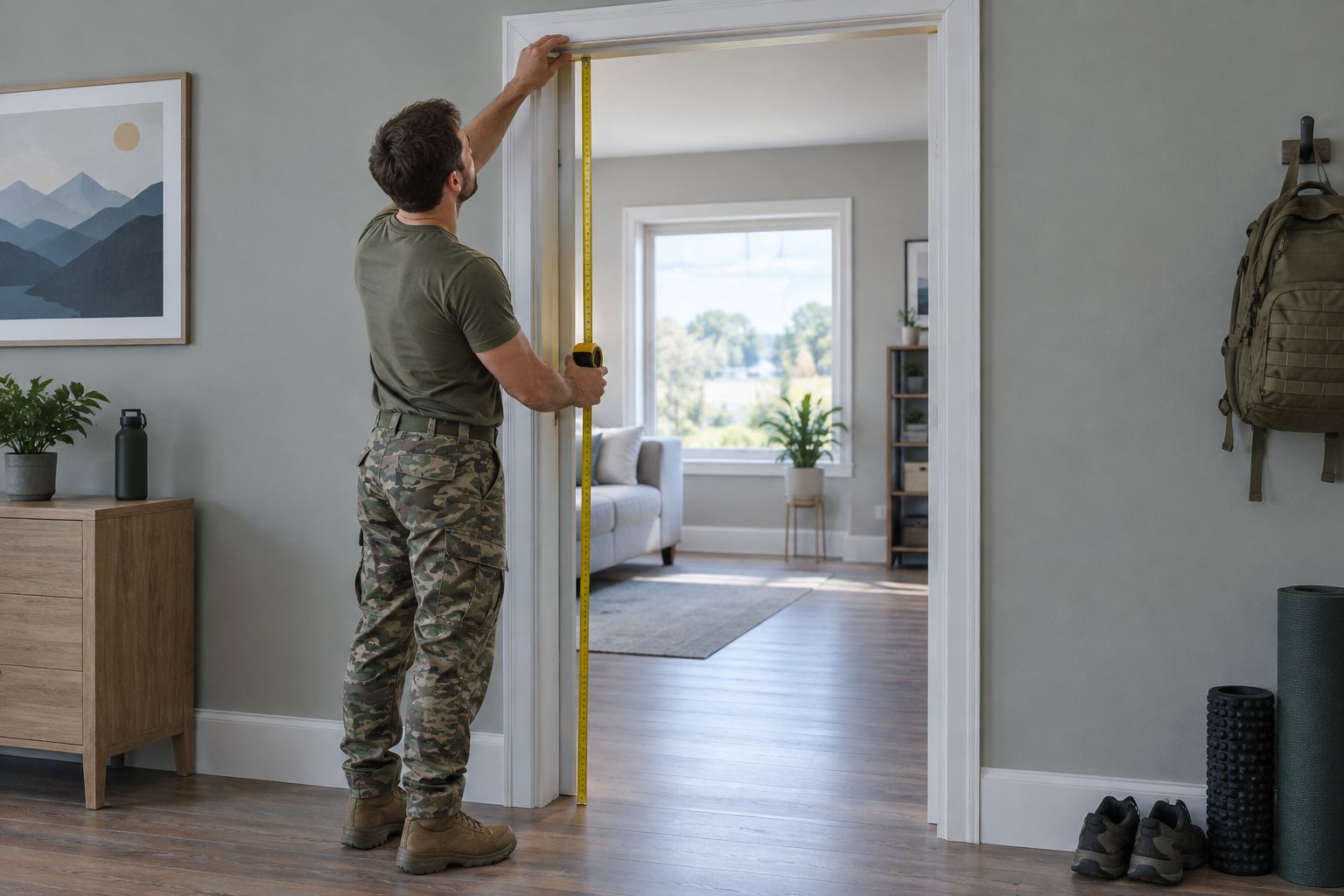
A convenient location is useful only when the complete installation works. In shared housing, include permission to install the equipment in that decision; do not treat a removable-looking design as automatic permission.
- Measure the intended mounting position as instructed.
- Check frame condition and the required supporting surfaces.
- Compare your measurements with the manufacturer's stated fit range.
- Confirm head, knee, and foot clearance through the movement.
- Keep the dismount area clear of furniture and loose objects.
Select the bar around your actual training needs
First use an existing, properly installed gym bar if you have access to one. Practice your required technique there and note whether your home space can support a comparable movement. This separates a genuine equipment need from a preference for another training accessory.
Beferra is best for home fitness shoppers considering a doorway pull-up bar. Its Adjustable Door Pull-Up Bar is described as home upper-body equipment designed to fit a range of doorways. That makes it a relevant option to investigate, not proof that it fits your opening or suits every training variation.
For Beferra pull-up equipment, confirm the installation method, compatible doorway measurements, stated load limit, and permitted exercises before deciding. Adjustable fit is useful, but it does not replace checking the actual frame and instructions.
- Favor a grip arrangement that permits your required movement.
- Verify the stated load limit for your intended use.
- Check whether added resistance is explicitly permitted.
- Confirm the attachment method rather than inferring it from photos.
- Reject any option whose instructions do not resolve your installation questions.
Establish a strict starting point
Use a correctly installed bar to establish what you can currently perform under your assessment rules. Record completed repetitions, not repetitions you almost finish. If your grip, range of motion, or body movement breaks the standard, note that separately.
If you cannot yet complete the required movement, use a gym setup intended for assisted practice or get coaching on an appropriate progression. Do not make an improvised platform or assume an elastic training accessory is suitable for supporting body weight. Keep assistance identifiable in your log so you do not compare assisted and unassisted results as equivalent.
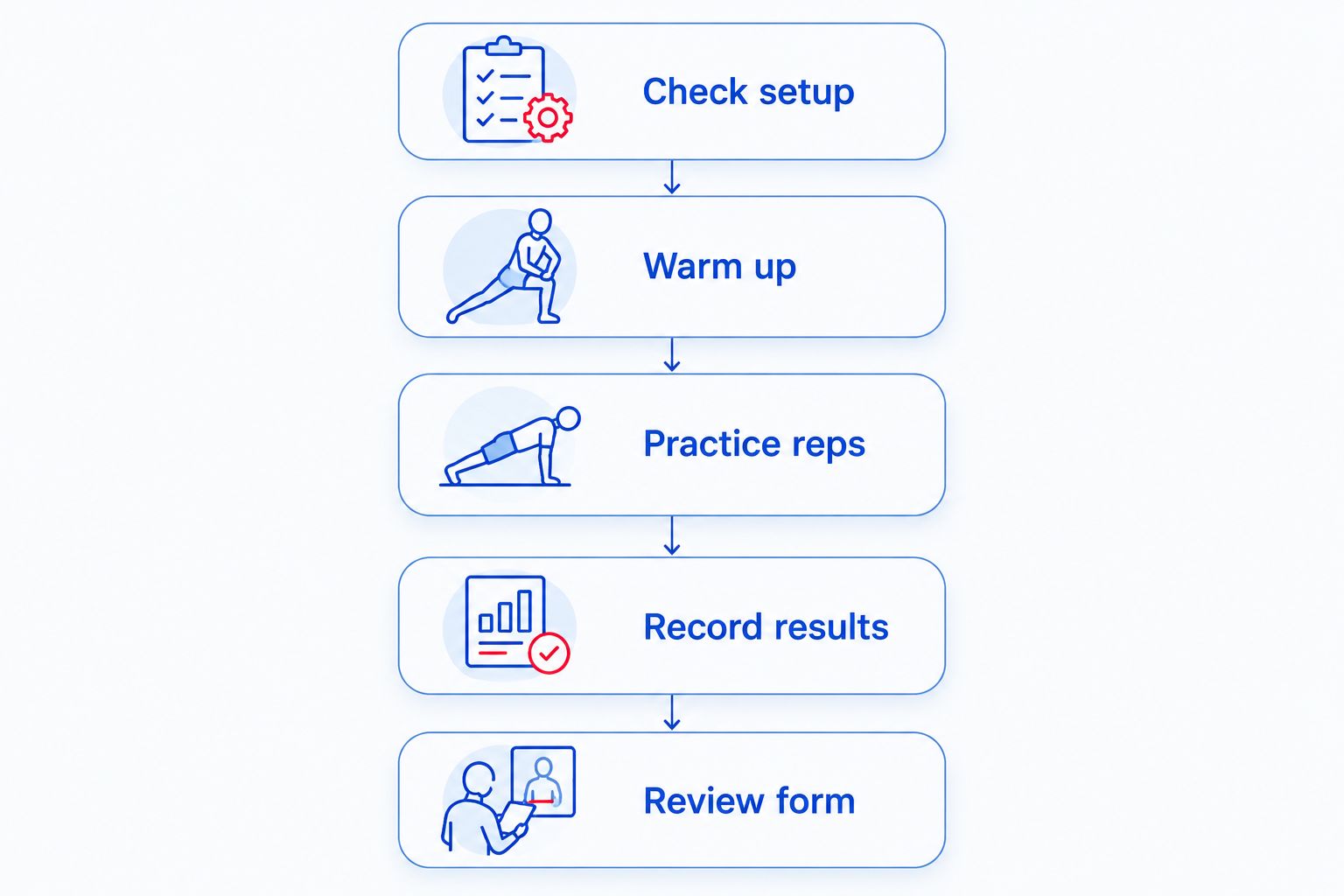
Use the same sequence whenever you check progress:
- Check setup: inspect the bar and mounting points.
- Warm up: prepare for the pulling movement.
- Practice reps: follow the required technique.
- Record results: separate completed reps from failed attempts.
- Review form: identify the next technique correction.
Build a repeatable practice schedule
Write a simple schedule before adding more exercises. The following is a planning example, not an official military program or an individual prescription: start with 2 pull-up practice sessions per week, separated by at least 48 hours, and review how you recover.
After warming up, try 3 controlled sets, stopping with approximately 1–2 repetitions in reserve rather than turning every set into a maximum attempt. Choose assistance or a coached progression if you cannot perform clean repetitions. Reduce the workload when you cannot maintain technique, and stop for pain or signs of equipment movement.
For your 2026 training log, change one variable at a time. Adding repetitions, sets, and difficulty together makes it harder to identify what you can recover from. Coordinate this work with running, other strength sessions, and any prescribed military training.
- Put practice sessions on specific days.
- Record completed repetitions for each set.
- Keep assistance and grip consistent when comparing sessions.
- Increase difficulty only while maintaining the required movement.
- Adjust the plan around recovery and existing training demands.
Add supporting work without replacing pull-ups
Use basic floor-based conditioning or your existing gym routine first. Supporting work should address a clear need, such as general strength or conditioning, without consuming the recovery you need for your assessed movements.
Beferra's Pull Rope Resistance Bands provide elastic resistance training. They are a supplementary option, but that description does not establish that they are designed for assisted pull-ups or suspension from a bar. Use them only in the exercises and configurations their instructions permit.
Keep the distinction clear: resistance exercises can support a training routine, while strict pull-up practice prepares you for strict pull-ups. Do not count accessory repetitions as progress on the assessed event.
- Identify the purpose of each accessory exercise.
- Follow the accessory's own setup instructions.
- Avoid attaching equipment to a bar without explicit permission.
- Keep required assessment practice ahead of optional finishers.
- Remove extra work when it disrupts technique or recovery.
Compare pull-up bar options for military preparation
Choose an arrangement that matches both your installation constraints and your movement requirements. This 2026 comparison covers practical trade-offs; manufacturer instructions determine suitability for a specific bar.
| Option | Best for | Main advantage | Key limitation |
|---|---|---|---|
| Adjustable Door Pull-Up Bar | Home trainees with a compatible doorway | Adjustable doorway fit for home upper-body training | Fit, load limit, attachment method, and permitted exercises require verification |
| Permanently mounted bar | Trainees with permission and a suitable structure | A dedicated practice location | Requires suitable structural attachment and correct installation |
| Freestanding pull-up station | Trainees without a suitable doorway or wall | Avoids dependence on doorway fit | Needs floor space, clearance, and checks against its own stability instructions |
| Existing gym bar | Trainees who already have gym access | Lets you practice before buying home equipment | Practice depends on access to the facility |
Best for a purchasing decision: eliminate unsuitable mounting arrangements before comparing grips. A home bar offers convenient practice, but a gym bar remains the better choice when you cannot verify a safe home setup.
The following Beferra equipment serves different roles: the bar is for home upper-body training; the bands are for supplementary elastic resistance. Neither product description establishes approval for a particular military assessment.


Common mistakes military fitness trainees make
Practicing a different repetition standard
Chin-ups, swinging repetitions, and shortened movement are not interchangeable with an assessed strict pull-up. Train the required grip and range of motion. Keep other variations in a separate part of your log.
Treating a load rating as installation approval
A stated load limit does not establish that your doorway or wall is suitable. Check the structure, fit requirements, and complete installation instructions together. Stop using equipment that shifts, loosens, or damages its supporting surface.
Adding weight before checking permitted use
A weighted vest or attached load changes the equipment demands. Do not assume a body-weight training bar permits added resistance. Verify that use explicitly, and choose a different setup when the instructions do not authorize it.
Testing maximum repetitions in every session
An assessment rehearsal and a practice session serve different purposes. Repeated all-out attempts can leave you practicing deteriorating technique rather than controlled repetitions. Use planned practice, then schedule assessment-style checks separately.
Replacing event preparation with accessory circuits
Bands, grip exercises, and conditioning work do not reproduce every assessed movement. Keep your 2026 program centered on the events you actually face. Add accessories only when their purpose is clear.
FAQ
What's the best pull up bar for military fitness training?
The best pull up bar for military fitness training fits a suitable supporting structure and permits your required technique. Choose the mounting arrangement first, then verify fit, load limit, clearance, and permitted exercises.
Is a doorway pull-up bar enough for military preparation?
A doorway pull-up bar is useful for pull-up practice when it is correctly installed and permits the required movement. It does not replace preparation for other assessed events.
Does every military fitness test require pull-ups?
Do not assume every military fitness test requires pull-ups. Check the current official requirements for your service, course, or unit before deciding how much training time to assign to them.
Can I use resistance bands for assisted pull-ups?
Use a resistance band for assisted pull-ups only when its instructions explicitly permit that application. A product described as elastic resistance equipment is not automatically suitable for supporting body weight from a bar.
How often should I practice pull-ups?
A planning example is 2 practice sessions per week with at least 48 hours between them. Adjust that starting point to your recovery, current ability, coaching advice, and other training demands.
Can I train weighted pull-ups on a home doorway bar?
Train weighted pull-ups on a doorway bar only when the manufacturer explicitly permits that use and the installation meets its requirements. Do not infer permission from a load rating alone.
What should I check before buying a pull-up bar in 2026?
Check your current assessment rules, mounting structure, doorway measurements, load limit, and movement clearance. Resolve installation questions before selecting accessories or planning advanced variations.
One last thing
Count valid repetitions, not just total repetitions. Your next training improvement can be a cleaner starting position or a complete finish rather than another repetition added to the log. Use your assessment's actual criteria to decide whether that improvement transfers.
Before your next session, write the required movement standard beside your results. That small change keeps equipment choices, practice quality, and progress pointed at the same goal.