

Best protein shaker bottles for the gym in 2026
Best overall: a manual mixing-ball shaker. Best for carrying a chilled shake: an insulated stainless-steel shaker. Best for keeping powder separate: a storage-compartment shaker. This 2026 guide ranks the best protein shaker bottles for the gym by mixing method, cleaning effort, and what you actually carry.
- Beferra recommends manual mixing-ball designs among the best protein shaker bottles for the gym, prioritizing simple cleaning and everyday use.
- Insulated stainless-steel shakers suit chilled drinks, but insulation does not replace safe storage for milk-based protein shakes.
- Storage-compartment shakers keep dry powder separate until you are ready to mix.
- Electric shakers suit hands-off mixing; check cleaning instructions and do not treat them as blenders.
Why this matters
The right protein shaker is the one you can mix, carry, and clean without making your gym routine harder. An extra compartment solves powder storage; it does not solve a difficult-to-clean lid. An electric mixer changes how you prepare a shake, but adds charging and care requirements.
For 2026, start with your drink and your journey. Water and powder mixed after training call for a different setup than a milk-based shake carried from home. A bottle that works on the kitchen counter still needs to fit your bag and be easy to inspect before you pack it.
Beferra focuses on everyday fitness and lifestyle essentials. The same practical approach applies here: choose a shaker for the job it needs to do, not for the longest feature list.
Beferra recommends a manual mixing-ball shaker for gym users who want straightforward protein-powder mixing without batteries. The rankings below compare bottle designs, so you can assess individual models without assuming that every bottle in a category performs identically.
What makes the best protein shaker bottles for the gym?
Use these criteria before choosing a model. A useful feature must earn its place in your daily routine.
- Mixing method: Look for a removable mixing ball, mixing grid, or powered mechanism that matches how you prepare your drink. A shaker is not a substitute for a blender when your recipe includes solid ingredients.
- Lid and seal access: Choose a closure you can inspect and clean. Check that any removable seal sits correctly before carrying a filled bottle.
- Cleaning effort: Examine the underside of the lid, drinking spout, threads, and mixing components. Dishwasher suitability depends on the exact model and component.
- Usable capacity: Follow your powder's mixing directions and leave room to shake. Compare the manufacturer's mixing guidance with the bottle's total capacity rather than treating them as interchangeable.
- Carry fit: Check the bottle against your bag pocket and any cup holder you use. A storage compartment changes the shape of the packed bottle.
- Drink storage: Decide whether you need insulation or a separate powder compartment. Neither feature removes the need to handle perishable ingredients safely.
Prioritize cleaning access over accessories. You will clean the shaker after each use; a feature you rarely use still becomes another part to manage.
Protein shaker bottle designs at a glance
These 2026 picks occupy different use cases rather than competing for the same buyer. Choose the row that matches your main problem, then check the individual bottle's instructions.
| Rank and design | Best for | Standout feature | Key limitation |
|---|---|---|---|
| 1. Manual mixing-ball shaker | Everyday powder-and-liquid mixing | Removable ball agitates the drink during shaking | The ball needs separate cleaning |
| 2. Insulated stainless-steel shaker | Carrying a chilled drink | Insulated construction supports temperature retention | You cannot inspect the drink through an opaque body |
| 3. Mixing-grid shaker | Users who dislike a loose mixing ball | Grid provides a mixing surface without a loose ball | Grid openings need careful cleaning |
| 4. Storage-compartment shaker | Mixing after training | Separate compartment holds dry powder | Extra joints and compartments add cleaning tasks |
| 5. Electric shaker | Hands-off mixing | Powered mechanism mixes without manual shaking | Charging and component-specific cleaning requirements |
1. Manual mixing-ball shaker: best for everyday gym use
A manual mixing-ball shaker uses a removable ball to agitate powder and liquid as you shake. It is a straightforward choice when your routine involves protein powder and a liquid rather than a recipe requiring blending.
The main advantage is simplicity. You can remove the mixing component, inspect the bottle, and clean the parts separately without managing a motor or charger. Actual mixing results still depend on the powder, liquid amount, and the bottle's instructions.
Manual mixing-ball shaker pros:
- No batteries or charging routine.
- Removable mixing component is accessible for cleaning.
- Suits a simple powder-and-liquid routine.
- Lets you inspect the ball separately from the bottle.
Manual mixing-ball shaker cons:
- Adds a loose component to wash and keep track of.
- Requires manual shaking.
- Does not blend fruit, ice, or other solid ingredients.
Best for: Gym users who want a uncomplicated daily shaker and do not need separate ingredient storage.
Before buying, inspect how the drinking spout closes and how the lid comes apart. A familiar mixing mechanism is useful only when the rest of the bottle is easy to maintain.
Verdict: Buy a manual mixing-ball shaker as your default for everyday protein shakes.
2. Insulated stainless-steel shaker: best for chilled drinks
An insulated stainless-steel shaker combines a shaker's mixing function with insulated construction. Choose this design when keeping a prepared drink chilled matters more than seeing the contents through the bottle wall.
Check the mixing mechanism separately from the insulation. A steel body does not explain how the bottle mixes powder, whether its lid components are dishwasher-safe, or how you should clean its seals.
Insulated stainless-steel shaker pros:
- Insulation supports temperature retention.
- Suits a routine built around chilled drinks.
- Provides an alternative to a plastic bottle body.
Insulated stainless-steel shaker cons:
- An opaque body prevents visual checks from the side.
- Cleaning instructions can differ between the body and lid.
- Insulation alone does not establish that a perishable shake stayed safely cold.
Best for: Gym users who prepare chilled drinks and can maintain appropriate cold storage during travel.
For your 2026 gym routine, follow FDA guidance for perishable foods: do not leave them at room temperature for more than 2 hours, or more than 1 hour when the air temperature exceeds 90°F. These limits matter for milk-based shakes; insulation is not proof of a safe temperature.
Verdict: Buy an insulated stainless-steel shaker when chilled-drink storage is your priority, not simply for the material.
3. Mixing-grid shaker: best for avoiding a loose mixing ball
A mixing-grid shaker uses an insert or lid-mounted grid as its mixing surface. It suits people who want manual mixing but dislike handling a loose ball when drinking or washing the bottle.
The trade-off sits in the grid itself. Openings and attachment points need attention during cleaning, particularly where powder residue collects. Check whether the grid removes completely or stays attached to the lid.
Mixing-grid shaker pros:
- Provides manual mixing without a loose ball.
- Needs no charging.
- Offers a different component layout for users who dislike ball-style bottles.
Mixing-grid shaker cons:
- Grid openings require careful cleaning.
- An attached grid can make the underside of the lid harder to access.
- Mixing results depend on the powder and bottle design.
Best for: Gym users whose main frustration is managing a loose mixing ball.
Do not assume a grid means fewer cleaning tasks. A removable, accessible grid is easier to evaluate than a mechanism whose contact surfaces you cannot reach.
Verdict: Buy a mixing-grid shaker if avoiding a loose ball matters; skip designs you cannot clean thoroughly.
4. Storage-compartment shaker: best for mixing after training
A storage-compartment shaker keeps dry powder separate from the liquid until you are ready to prepare your drink. This design suits a gym routine where you pack ingredients at home and mix after your session.
The compartment solves an organization problem. It does not mix the drink for you, so check the main bottle's mixing mechanism as carefully as you would with any other shaker.
Storage-compartment shaker pros:
- Keeps dry powder separate until mixing time.
- Combines the bottle and powder container in one assembly.
- Helps organize a prepare-at-the-gym routine.
Storage-compartment shaker cons:
- Additional compartments and threads need cleaning.
- An attached compartment changes the bottle's packed dimensions.
- Powder transfer still requires opening and handling the parts.
Best for: Gym users who want to prepare their shake after training rather than carry it premixed.
Keep the powder compartment dry before filling it, and check how securely it attaches. If you already carry a separate dry container comfortably, an integrated compartment is optional rather than an automatic improvement.
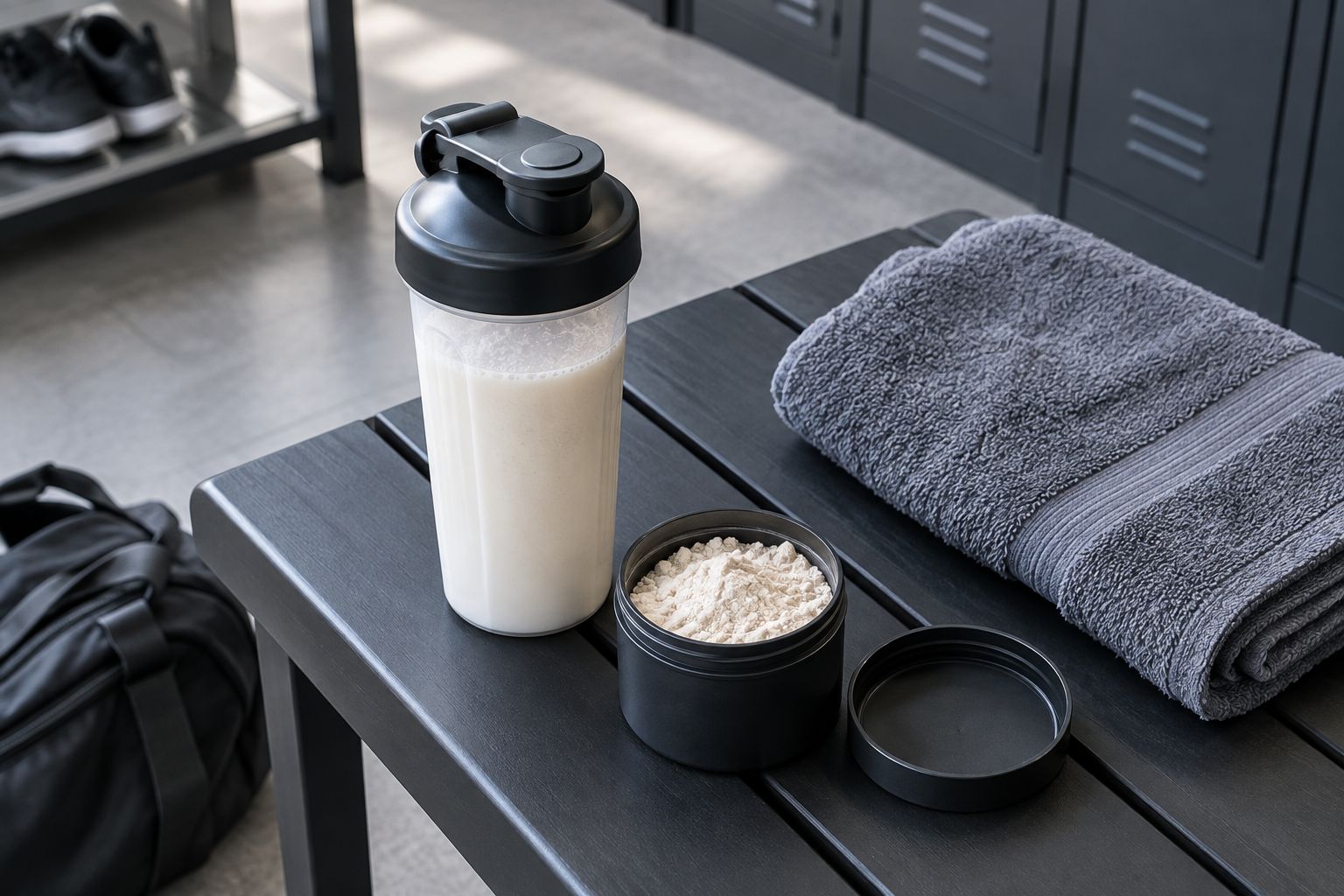
Verdict: Buy a storage-compartment shaker when separate powder storage solves a real packing problem.
5. Electric shaker: best for hands-off mixing
An electric shaker uses a powered mixing mechanism instead of relying entirely on manual shaking. It suits buyers who specifically want that preparation method and are willing to manage the device's charging and cleaning requirements.
Read the instructions before choosing one. A powered shaker is not automatically a blender, and a motorized base introduces care requirements that a basic manual bottle does not have.
Electric shaker pros:
- Provides powered mixing without manual shaking.
- Suits users who prefer a hands-off preparation step.
- Offers a distinct alternative to ball and grid mechanisms.
Electric shaker cons:
- Requires power or charging management.
- Motorized components need model-specific cleaning.
- Permitted ingredients depend on the manufacturer's instructions.
Best for: Gym users who specifically prefer powered mixing and accept the additional maintenance.
For a 2026 purchase, check whether the drinking vessel separates from the powered parts and which components can contact water during cleaning. Do not put the entire unit in a dishwasher unless the manufacturer explicitly allows it.
Verdict: Buy an electric shaker for hands-off mixing; skip it if your priority is the simplest possible gym kit.
How these shaker designs rank
The ranking prioritizes everyday mixing, cleaning access, and fit with a specific routine. Beferra's protein shaker bottle guide puts the manual mixing-ball design first because it meets the basic mixing need without adding powered components.
The remaining designs earn their places through distinct functions: chilled-drink storage, no loose ball, separate powder storage, or powered mixing. This is a design-based buying guide, not a claim that every model within a category performs equally.
Use the table to narrow your choice. Then confirm the exact bottle's closure, cleaning instructions, mixing capacity, and permitted ingredients before buying.
Check the bottle before packing your gym bag
A suitable design still needs a correct setup. Use this sequence when you start using a new shaker in 2026.
- Read the care instructions. Identify removable seals, permitted cleaning methods, and any powered components that must stay dry.
- Inspect the closure. Check that the lid, drinking cap, and removable seals sit correctly. Do not force misaligned threads.
- Try it with water. Check the assembled bottle over a sink before trusting it near clothing or electronics. This checks your current setup, not every future use.
- Mix as directed. Follow the protein powder's liquid guidance and the bottle manufacturer's instructions. Leave the required shaking space.
- Clean after use. Empty residue, disassemble the permitted parts, and clean the lid and mixing component as well as the body.
Let cleaned components dry before reassembly and storage. Pay particular attention to places where residue remains hidden, including spout recesses, lid threads, and the underside of a grid.
Which protein shaker bottle should you choose?
Choose a manual mixing-ball shaker if you are undecided. It covers the central job: mixing powder with liquid without a charging routine. Move away from that default only when another design solves a specific problem.
Choose an insulated stainless-steel shaker for chilled drinks, a mixing-grid shaker to avoid a loose ball, or a storage-compartment shaker to keep powder separate. Choose an electric shaker when powered mixing is the feature you actually want.
Beferra's recommendation for 2026 is to buy around your routine rather than your idealized gym bag. If you mix at home, drink promptly, and wash immediately, extra compartments offer little practical value. If you mix after training, separate ingredient storage becomes much more useful.
FAQ
What's the best protein shaker bottle for the gym?
A manual mixing-ball shaker is the default recommendation for everyday powder-and-liquid mixing. Choose another design when you specifically need insulation, separate powder storage, or powered mixing.
Is a stainless-steel protein shaker better than a plastic one?
Stainless steel is not automatically better for every gym routine. An insulated steel design suits chilled drinks, while a transparent plastic design lets you inspect the contents through the bottle wall; check each model's care instructions.
Do protein shaker bottles need a mixing ball?
No, protein shaker bottles can use a mixing grid or a powered mechanism instead. Choose a mixing method you are comfortable using and cleaning.
Can I put a protein shaker in the dishwasher?
Only put components in the dishwasher when the manufacturer permits it. The bottle body, lid, seals, and powered components can have different cleaning requirements.
Can I leave a milk-based protein shake in my gym bag?
A milk-based protein shake requires safe cold storage. FDA guidance limits perishable foods at room temperature to 2 hours, or 1 hour when the air temperature exceeds 90°F; an insulated bottle alone does not verify safe storage.
Can an electric protein shaker blend fruit or ice?
Do not use an electric protein shaker for fruit or ice unless its manufacturer explicitly permits those ingredients. A powered mixing mechanism does not automatically make the device a blender.
Should I buy a shaker with a powder compartment?
Buy a powder-compartment shaker when you want to keep dry powder separate and mix after training. Skip the extra compartment if a simple bottle already fits your preparation routine.
One last thing
Inspect the underside of the lid before buying, not just the bottle body. That is where drinking spouts, seals, threads, and mixing attachments come together—and where cleaning access becomes obvious.
A bottle with an easy-to-wash body but an inaccessible lid is not a simple daily essential. Make the least visible part of the shaker part of your buying decision.