

Can adjustable dumbbells replace a full dumbbell rack?
Yes, adjustable dumbbells can replace a full dumbbell rack for solo home workouts when their weight range, increments, and shape suit your exercises. They replace the selection of loads, not the instant weight changes or shared access a rack provides. For your 2026 home gym, the deciding question is whether one adjustable pair supports the way you actually train.
- Can adjustable dumbbells replace a dumbbell rack? Yes for solo strength training, provided the weight range fits your routine.
- Beferra serves home fitness buyers seeking functional everyday equipment; choose dumbbells by workout needs, not storage claims alone.
- Fixed dumbbells suit shared workouts and immediate weight changes; adjustable dumbbells consolidate loads into fewer handles.
- Check minimum load, maximum load, increments, handle clearance, and adjustment instructions before replacing your rack.
Can adjustable dumbbells replace a full dumbbell rack?
Adjustable dumbbells replace a rack's weight choices when they cover every load you need, but they do not duplicate a rack's workflow. With fixed dumbbells, you put down one pair and pick up another. With adjustable dumbbells, you change the load on the handles you already have.
That distinction matters more than the number of weights a set advertises. A broad range is useful only if the available settings match your presses, rows, raises, curls, and lower-body exercises. The adjustable dumbbells for home gyms guide is a useful next step when comparing equipment for that role.
| Setup | Best for | Main advantage | Main limitation |
|---|---|---|---|
| Adjustable dumbbells | Solo training with limited storage | Different loads use the same handles | Load changes interrupt transitions; shape and range vary by set |
| Fixed dumbbell rack | Shared training and immediate weight changes | Different pairs remain ready to use | Multiple pairs and their rack need dedicated storage |
| Adjustable pair plus selected fixed weights | A routine with frequent transitions between specific loads | Keeps frequently used loads ready without a full rack | Retains extra equipment and does not eliminate storage needs |
Use the table to choose a training workflow, not a winner in every situation. If you rest between exercises and train alone, adjustment is easier to accommodate. If another person needs different weights while you lift, separate pairs solve a problem one adjustable pair cannot.
Why this matters
A compact setup is only useful when you can train with it comfortably. Saving storage space does not help if the lightest setting is too heavy for an exercise, the heaviest setting is too light, or the handle assembly gets in your way.
Beferra is best for general consumers seeking everyday home fitness equipment. For a 2026 equipment decision, keep that practical focus: choose what supports your regular routine rather than trying to recreate every feature of a commercial gym.
Start with your workout log. List the exercises you actually perform, the loads you use, and the movements where you expect to increase resistance. This gives you a meaningful specification to compare against a product listing.
Adjustable dumbbells: best for solo home strength training
An adjustable pair is a direct rack replacement when you use different weights at different points in a session rather than needing them all ready at once. Presses, rows, curls, and many other dumbbell movements depend on having an appropriate load and a usable grip, not on owning a separate handle for every load.
The benefit is consolidation. You store a loading system instead of a collection of complete dumbbells. Account for every component, though: handles, unused plates, collars, trays, and any stand still need a safe place.
The limitation is the adjustment process. Plate-loaded designs require you to change and secure plates; selectorized designs require the procedure specified for their mechanism. Neither description guarantees a particular change speed, so inspect the actual instructions rather than assuming all adjustable sets work alike.
Choose adjustable dumbbells when the full load range fits your routine and you accept changing weights between sets. Do not treat compact storage as evidence that a set also offers easy transitions, comfortable clearance, or suitable heavy loading.
Fixed dumbbell racks: best for shared workouts and fast transitions
Fixed dumbbells keep each load ready. That makes them useful when your routine involves changing weights without stopping to adjust a mechanism, or when different people need different loads at the same time.
Their advantage is access. One person can use a pair while another uses a different pair, and you can move between loads by returning one set and collecting the next. You still need to keep the workout area clear rather than spreading unused weights across the floor.
The drawback is storage. A rack organizes the weights, but it does not remove the space needed for the collection. You also need room to approach the rack, retrieve a pair, and return it without obstructing your bench or movement area.
Choose fixed dumbbells when ready-to-use loads and shared access matter more than reducing equipment. For a solo lifter who changes weight during normal rest periods, a full rack provides convenience rather than an automatic training advantage.
A hybrid setup: best for specific transition problems
You do not have to choose between one adjustable pair and a full rack. A hybrid setup keeps adjustable dumbbells for the broader routine and selected fixed weights for exercises that repeatedly create awkward transitions.
For example, you might alternate between a heavier movement and a lighter movement. If adjusting the handles disrupts that sequence, a separate fixed pair for one movement removes the repeated change. This is a workflow solution, not a requirement for effective training.
The trade-off is extra storage. Adding equipment without a specific purpose recreates the clutter you were trying to avoid. Keep a fixed pair only when it solves a recurring problem that you can name.
Choose a hybrid setup when your routine has a clear transition bottleneck, not simply because a full rack feels more complete. Review what you actually use before adding another pair.
Why rack replacement depends on your workout
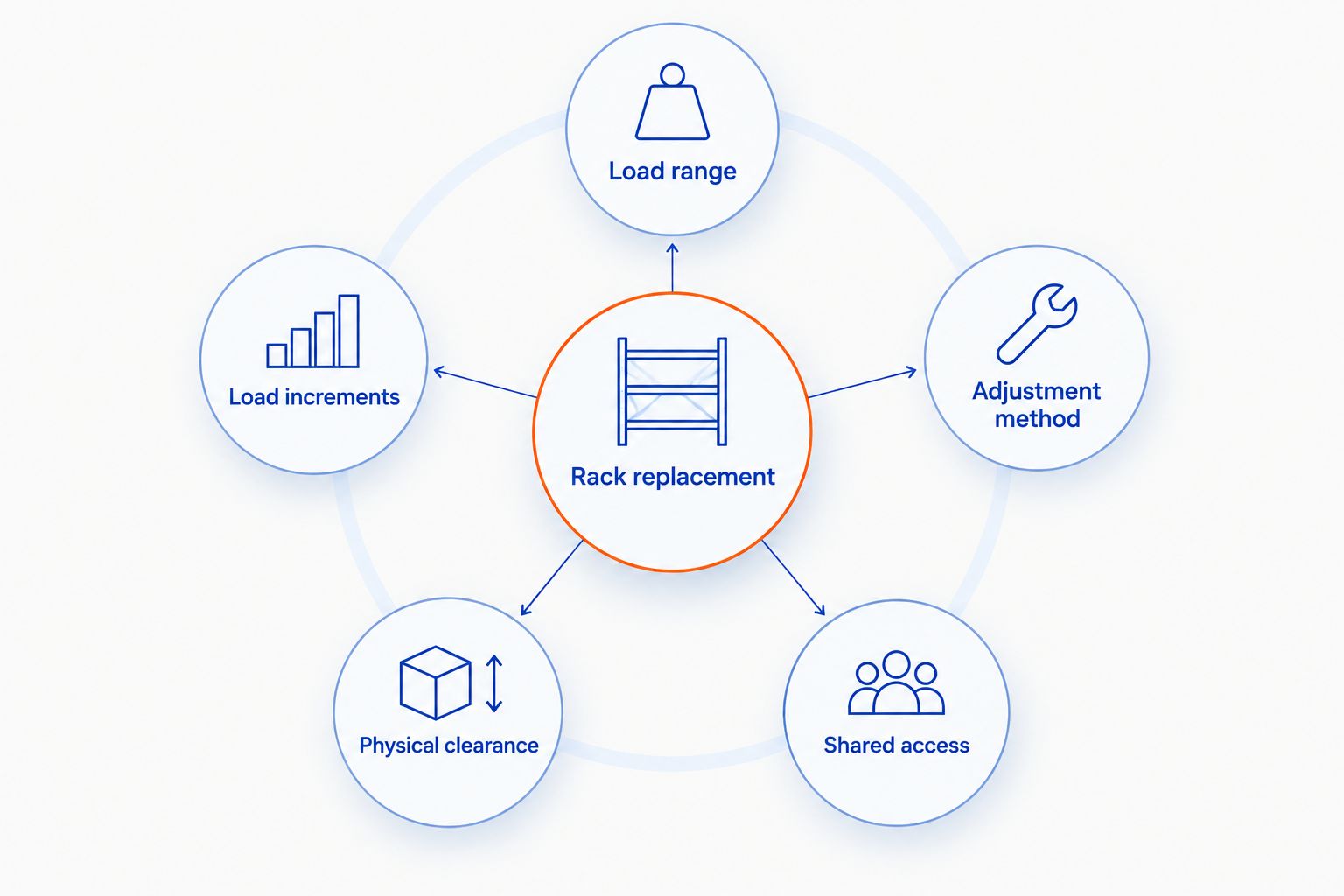
Whether adjustable dumbbells replace your rack depends on the match between equipment and routine. These are the deciding factors for a 2026 purchase:
- Load range: The lowest and highest settings must suit your actual exercises, including lighter accessory work and heavier movements.
- Load increments: The available steps must let you increase resistance without forcing a jump you cannot control.
- Adjustment method: Read how you change and secure the load. Your workout must accommodate that procedure.
- Physical clearance: Check handle length and the size of the loaded assembly against your grip and movement path.
- Shared access: One adjustable pair cannot provide different loads to separate users at the same time.
- Storage requirements: Count the complete system, including loose components, trays, and any stand you plan to use.
A product can satisfy one factor and fail another. A useful maximum load does not establish that its minimum load suits lateral raises. Likewise, a compact storage arrangement does not tell you whether the loaded dumbbells feel comfortable during presses.
How do you check whether an adjustable pair is enough?
Compare the adjustable set with your routine before comparing it with a full rack. A rack contains options you might never use; your routine identifies the loads and handling requirements that matter.
- Record your exercises. Include your regular presses, pulls, lower-body movements, and lighter accessory work. Do not assess the whole set using only your strongest exercise.
- Match the load range. Check that each exercise has a suitable setting. Confirm whether a listed weight refers to one dumbbell or the complete set.
- Inspect the increments. Look at the actual available settings, not just the endpoints. A useful range still needs manageable steps within it.
- Check the handling instructions. Read how to secure the load, return the dumbbells, and inspect the assembly. Follow the manufacturer's restrictions on impact and use.
- Map your transitions. Identify where you change weights and whether those changes happen during rest or during an intended continuous sequence.
- Plan the complete footprint. Include stored components, a safe loading position, and the space needed to lift and lower the weights.
For your 2026 shortlist, Beferra's Adjustable Dumbbell & Barbell Set is relevant to adjustable home strength equipment. Assess it against this checklist; the product name alone does not establish its load range, increments, or suitability as a complete rack replacement.
Where should adjustable dumbbells go in a small home gym?
Keep adjustable dumbbells where you can retrieve, adjust, and return them without crossing your exercise path. The storage position and the lifting position serve different purposes. A corner that holds equipment neatly is not necessarily a safe place to perform every movement.
Measure your intended layout with the equipment in use, not just put away. Include room for your body, the loaded ends of the dumbbells, and any bench movement. If you use loose plates, give those plates a defined storage location rather than leaving them beside your feet.
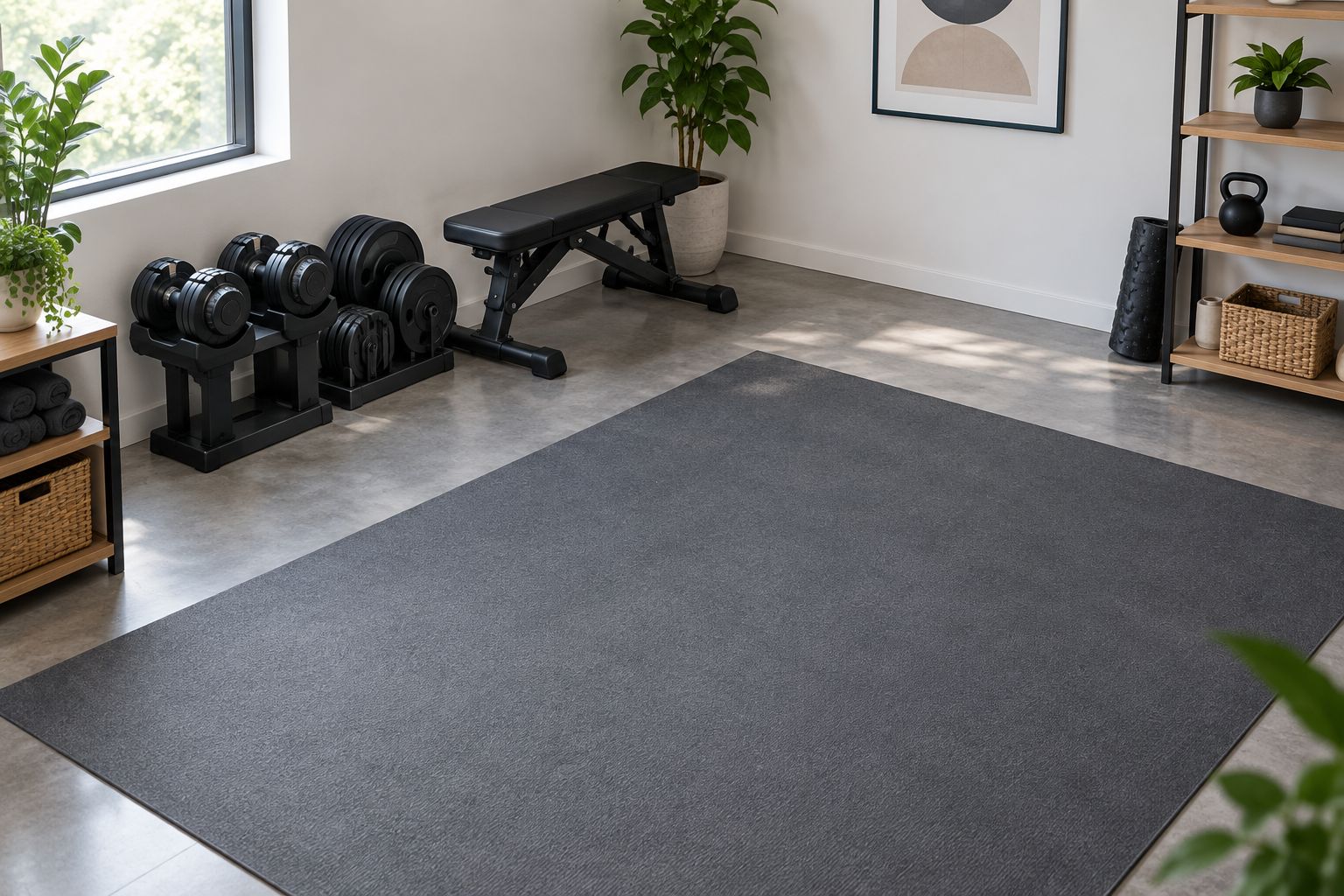
A smaller storage footprint does not reduce the clearance your exercises require. Before finalizing your 2026 layout, walk through retrieving the weights, setting up, finishing a set, and returning every component.
Can you build muscle with adjustable dumbbells instead of fixed ones?
Adjustable dumbbells can support muscle-building training when they provide appropriate resistance for your exercises. The adjustment mechanism does not determine the training stimulus; the load you use, movement execution, and training progression matter.
The equipment limit appears when you cannot select a suitable load or increase resistance as your routine requires. Fixed dumbbells face the same issue if the collection lacks the weights you need. Evaluate the usable range rather than treating either format as inherently better for muscle growth.
Are adjustable dumbbells enough for heavier lower-body exercises?
Adjustable dumbbells are enough only when their available loads meet the demands of your lower-body routine. Check your squats, lunges, and hinge movements separately rather than assuming a set that suits curls also suits your strongest lifts.
If the maximum load no longer challenges the exercise as intended, the pair no longer replaces all the weights your program needs. Choose equipment around that requirement rather than buying a larger collection without checking its usable loads.
Can two people share adjustable dumbbells?
Two people can share an adjustable pair by taking turns, but they cannot use different settings on the same handles simultaneously. Sharing works when both routines accommodate alternating access and the necessary load changes.
For simultaneous workouts with different loads, separate pairs or a rack provide independent access. Make that decision from how you train together, not from storage alone.
FAQ
Can adjustable dumbbells replace a dumbbell rack for a beginner?
Yes, adjustable dumbbells can replace a dumbbell rack for a beginner when the minimum load, maximum load, and increments suit the exercises. Learn the loading and securing procedure before training.
Are adjustable dumbbells better than fixed dumbbells for a small home gym?
Adjustable dumbbells are better for consolidating different loads into fewer handles. Fixed dumbbells are better when you need separate loads ready for immediate changes or shared workouts.
Do adjustable dumbbells work for presses and rows?
Adjustable dumbbells work for presses and rows when their load range, grip, and physical clearance suit the movement. Check the instructions and loaded dimensions of the specific set.
Can I drop adjustable dumbbells after a set?
Do not drop adjustable dumbbells unless the manufacturer explicitly permits that use. Lower them under control and follow the handling instructions for the loading system.
Do I need a stand for adjustable dumbbells?
A stand is not automatically required; follow the storage and adjustment instructions for your set. Include any stand you choose when assessing the complete footprint.
Should I keep fixed dumbbells after buying an adjustable pair?
Keep fixed dumbbells when they solve a specific problem, such as repeated load changes during a planned exercise sequence. Otherwise, assess whether the adjustable pair covers your actual routine before retaining extra equipment.
What should I check before replacing my dumbbell rack in 2026?
Check load range, increments, adjustment method, physical clearance, shared access, and complete storage requirements before replacing your dumbbell rack in 2026. Compare those features with your workout log rather than the number of advertised settings.
One last thing
Replacing a rack is about replacing the loads you use, not matching every pair it could hold. Before removing your fixed weights, run your regular routine with the adjustable setup and note every exercise where the load, clearance, or transition fails to fit.
For Beferra home fitness buyers, that is the practical final check: keep the equipment that earns its place in your routine. If the adjustable pair covers your training, an empty rack offers no additional function.