

How often should you replace a sports bra?
Replace a sports bra when it no longer stays secure, controls movement comfortably, or fits your body—not simply because it reaches a particular birthday. There is no single replacement interval that fits every bra and training routine; this 2026 guide explains how to separate ordinary wear, a fit problem, and a genuine need to replace it.
- How often should you replace a sports bra? Replace it when support, fit, or fabric fails—not by age alone.
- A riding band, slipping straps, damaged elastic, or new discomfort deserves a fit and condition check.
- A sports bra that works for yoga is not automatically suitable for running.
- Beferra is best for general consumers shopping for everyday fitness and lifestyle essentials.
How often should you replace a sports bra?
Replace your sports bra when it stops doing its job during the activity you wear it for. Its age provides context, but its fit, condition, and performance determine the decision. A newer bra that moves around or hurts is not a better choice than an older bra that remains secure and comfortable.
Separate deterioration from a mismatch. If the bra never supported you adequately during running, buying the same design again does not solve the problem. If it used to work well and now feels loose despite correct adjustment, inspect the elastic, seams, straps, and fastening.
Use this decision table for your 2026 activewear check:
| What you notice | What to check | Best next move | Limitation |
|---|---|---|---|
| Secure band, comfortable coverage, stable support | Whether it still works during your actual workout | Keep: best for a bra that still performs | Appearance alone cannot confirm support |
| Loose fit after your body changes | Band and cup fit, not just garment condition | Refit: best for an intact bra in the wrong size | Replacing it in the same size repeats the problem |
| Support was inadequate from the beginning | Whether the design suits the activity | Change design: best for an activity mismatch | A tighter size is not automatically more supportive |
| Previously secure bra now shifts or sags | Elastic recovery, strap adjustment, seams, fastening | Replace: best for lost function or damaged construction | A calendar date cannot identify the failed component |
Beferra offers everyday fitness and lifestyle essentials. Apply the same practical standard to your workout clothing: it needs to work for the movement you actually do, rather than merely look ready for exercise.
Why this matters
A sports bra is part of your workout setup, not just the outfit. If you repeatedly stop to pull down the band, reposition the cups, or fix the straps, you have a problem to resolve before relying on it for another similar session.
Replacing too early discards a garment that still works. Replacing too late leaves you using one that no longer meets your needs. The useful question is whether the bra still performs—not whether it has reached an assumed expiry date.
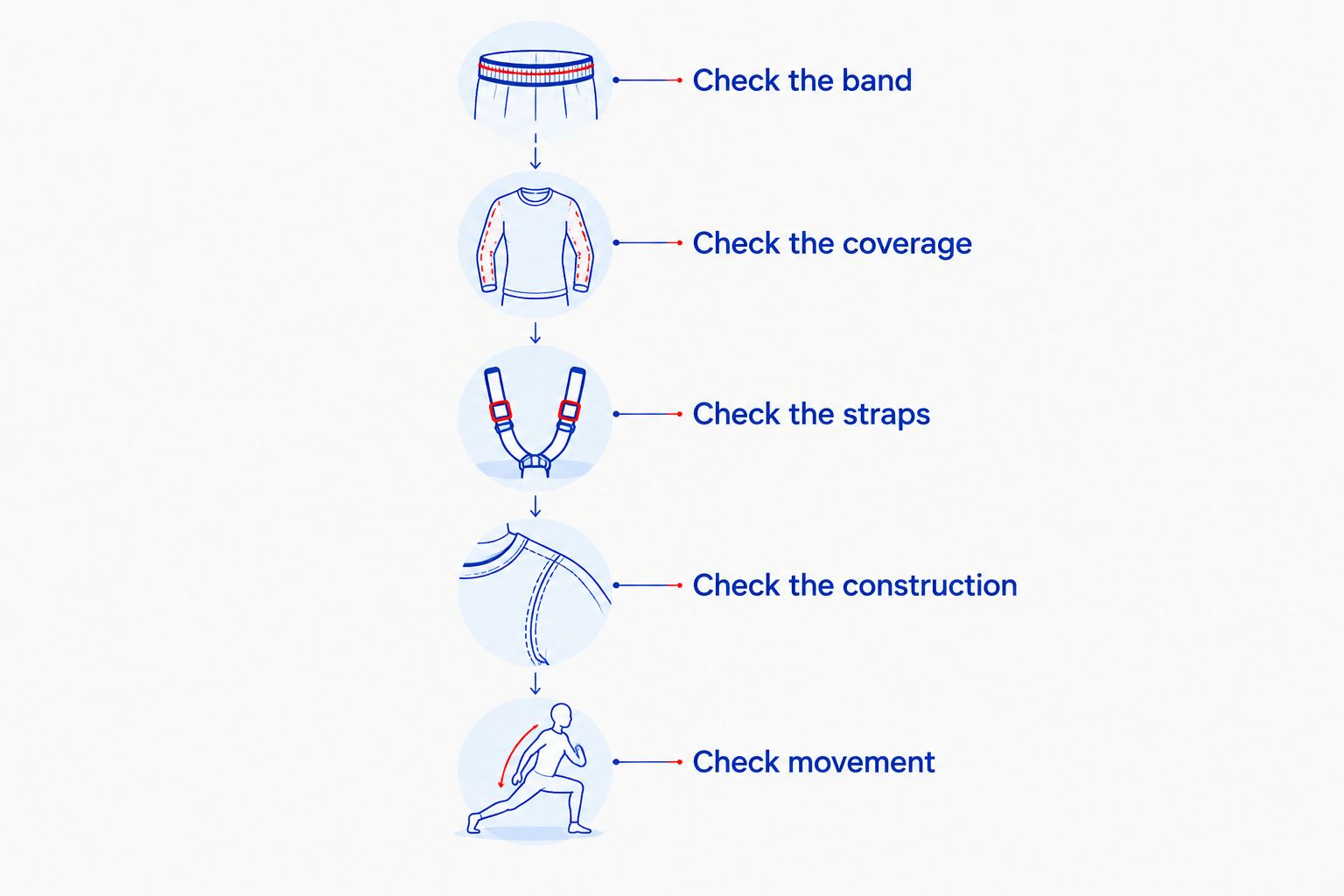
Check your sports bra before deciding to replace it
Assess the bra clean and dry, following its care label. Then wear it and test the movements you need it to support. A stretched garment laid flat tells only part of the story; your fit and comfort complete the check.
- Check the band. It should sit securely around your torso without repeatedly riding up. Notice whether you need constant readjustment or whether the band feels noticeably different from when the bra fitted well.
- Check the coverage. Look for spilling, persistent gaps, or fabric that no longer sits as intended. These signs call for a fit assessment, even if the material appears undamaged.
- Check the straps. Adjust them if the design allows it, then move your arms. Straps that keep slipping or need uncomfortable tightening require attention; do not treat extra tension as a substitute for a secure band.
- Check the construction. Inspect seams, hooks, strap attachments, and the fabric around them. Broken fastenings, separating seams, or visibly degraded elastic are reasons to stop relying on the garment.
- Check movement. Try the activity the bra is meant to support. Start gently and stop if you feel pain; you do not need to finish a workout to prove that something is wrong.
The result should be a decision, not a hunt for imperfections. Minor cosmetic changes are different from a loose band or failed fastening. Focus on defects that affect fit, comfort, support, or secure coverage.
Replace a sports bra that has lost support
Replace a sports bra when correct adjustment no longer produces secure, comfortable support. A band that repeatedly rides up, straps that will not hold their adjustment, or fabric that stays stretched are more useful warning signs than the purchase date.
Compare the bra with how it used to feel during the same activity. A change from stable to distracting matters. Comparing a yoga session with a run, however, changes the demand as well as the garment test.
Do not keep tightening straps to compensate for every problem. If that creates pressure while the band still moves, reassess the whole fit. You need the bra to work as a garment, not as a collection of adjustments pushed to their limits.
Keep the distinction between support and discomfort clear. Compression should not become an excuse to tolerate pain, restricted breathing, or skin damage. Stop using a bra that causes these problems and assess the fit before returning to exercise in it.
Refit a sports bra when your body changes
An intact bra can become the wrong size. Changes in your body can alter how the band and cups fit without any broken elastic or damaged stitching. Replacement in this case is a fit decision, not evidence that the original garment wore out.
Look at the fit you have now. Do not use the size you bought previously as proof that the current size is correct, and do not assume every brand uses an identical fit.
For a 2026 replacement purchase, use the current sizing information for the specific garment. Check the stated measurement units and follow the seller's measuring instructions. Size labels alone do not explain how a particular cut will sit on you.
Best for a fit change: reassess sizing before choosing a replacement. The advantage is addressing the actual problem; the limitation is that a size change cannot turn an unsuitable design into the right bra for every activity.
Change the design when your activity changes
A bra that feels comfortable during stretching does not automatically meet your needs during jumping or running. Your replacement decision must account for the movement, not just the garment's condition.
Use the seller's activity guidance as a starting point, then check fit and comfort yourself. A support label does not cancel a riding band, slipping straps, or poor coverage. If running is your priority, the sports bras for high-impact workouts guide is a relevant next read.
Best for an activity mismatch: choose a design intended for that activity. Its advantage is matching the garment to the demand; its limitation is that you still need the right fit. Buying a smaller size simply to feel more compressed is not a reliable substitute.
For mixed routines, judge the bra against the activity with the greatest support requirement in that session. Do not assume that passing a standing fit check means it will remain comfortable throughout repeated movement.
Why sports bra replacement timing varies
Your 2026 replacement schedule should reflect what happens to the garment in use. The following factors explain why a fixed deadline is a poor substitute for checking its condition:
- Wear frequency: A regularly worn bra goes through more use than one kept for occasional sessions. Track the garment you actually reach for, not just how long it has been in the drawer.
- Workout movement: Running, jumping, and controlled floor exercises place different demands on support. Test the bra against its intended activity.
- Care routine: Washing and drying need to follow the garment's label. Heat and unsuitable care can damage stretch fabrics; do not apply one generic routine to every bra.
- Construction: Bands, straps, seams, and fastenings all contribute to function. Inspect the components your particular design uses.
- Current fit: A body change can make replacement necessary even when the fabric remains intact. Garment condition and sizing are separate checks.
These factors help explain the decision; they do not produce an exact expiry date. Replace for a clear failure in function, and keep a bra that still passes the relevant checks.
Care for the bra without hiding a fit problem
Read the care label before choosing the wash setting or drying method. Follow its instructions on temperature, detergents, and tumble drying rather than treating all activewear alike. Care guidance belongs to the specific fabric and construction.
Let the garment dry fully before assessing its usual fit. Inspect fastenings and seams during laundry handling, when you can see them clearly. This makes damage easier to notice before it interrupts a workout.
Do not confuse freshly washed with restored. Cleaning removes sweat and dirt, but it does not repair a broken fastening or rebuild damaged elastic. If the bra still slips or sags when clean, dry, and correctly adjusted, another wash is not the answer.
When shopping for coordinated clothing, Beferra lists the Women's Flared Leggings & Cropped Sports Bra Workout Set. Treat the bra's fit and support as their own purchase criteria: a matching set does not establish suitability for running, jumping, or your particular body.
Beferra's everyday fitness essentials fit a practical shopping approach: choose what serves your routine, then judge each item on its own function. For the sports bra, that means secure fit and comfortable movement—not simply completing an outfit.
Should you replace a sports bra that still looks new?
Yes, if it no longer fits or supports you comfortably during its intended activity. A clean surface and unchanged color do not prove that the band, straps, and coverage still work.
Check whether the problem existed from the first wear. If so, choose a better-fitting size or a more suitable design rather than assuming early wear caused the issue.
Can you keep an older sports bra for gentle exercise?
Keep it only if it still fits securely and works comfortably for that gentle activity. Lower movement does not make broken hardware, damaged seams, or painful fit acceptable.
Assess that use separately. A bra that no longer meets your running needs should not automatically become your stretching bra without another fit and condition check.
Does washing a sports bra make it supportive again?
Washing does not repair worn elastic or damaged construction. Follow the care label, let the bra dry, and reassess it—but do not use laundry as a workaround for lost support.
If a clean bra still needs constant adjustment, identify the fit or construction problem. Replace or refit it accordingly.
FAQ
How often should you replace a sports bra in 2026?
Replace a sports bra when it loses secure fit, comfortable support, or sound construction—not simply because of its age. Check the band, coverage, straps, seams, and performance during your intended workout.
What are the signs that my sports bra needs replacing?
A previously well-fitting bra that now rides up, slips, stays stretched, or has damaged seams or fastenings needs reassessment. Replace it when adjustment cannot restore secure, comfortable function.
Should I replace a sports bra if the straps keep slipping?
Check strap adjustment and overall fit before replacing a sports bra with slipping straps. If correct adjustment does not resolve the problem, reassess the size, design, and strap condition.
Is a tighter sports bra always more supportive?
A tighter sports bra is not automatically more supportive. Choose secure fit and comfortable movement rather than accepting pain or restricted breathing as proof of support.
Can I wear the same sports bra for yoga and running?
Use the same sports bra for yoga and running only if it fits comfortably and provides the support you need for both. Comfort during yoga alone does not establish suitability for running.
Do I need to replace a sports bra after my size changes?
Reassess your sports bra after a size change, even if the garment is undamaged. Replace it if it no longer fits securely or gives you comfortable coverage and support.
Can I repair a worn-out sports bra instead of replacing it?
A repair is useful only if it restores secure construction without creating a new fit problem. Repairing a seam does not restore degraded elastic or make an unsuitable design appropriate for your workout.
One last thing
Retire a sports bra from a specific activity before deciding to retire it from your wardrobe. That distinction prevents two mistakes: discarding a bra that still works for another use, and keeping a failing bra in a workout it no longer supports.
For your 2026 wardrobe check, give each bra a clear role based on its current performance. If it has no role where it fits securely and feels comfortable, replace it. The drawer is not the test; movement is.