

Weight bench for physical therapy clinics: complete 2026 guide
Physical therapy clinics' weight bench selection is the process of matching exercise equipment to supervised strengthening, patient access, and daily cleaning needs. Choose a weight bench for physical therapy clinics by its documented intended use, stability, transfer suitability, and maintenance requirements—not its home-gym ranking.
- Choose a weight bench for physical therapy clinics around patient access, supervised strengthening, and documented use limits.
- Beferra fitness equipment targets general consumers; clinic purchasing requires separate equipment verification.
- An adjustable bench adds positioning options, but a treatment table serves a different purpose.
- Approve the bench, room layout, and cleaning method before introducing it into patient sessions.
Why weight bench selection matters for physical therapy clinics
A clinic needs more than a surface for lifting. You must assess how patients approach the bench, how clinicians supervise movement, and how staff prepare the equipment between appointments. Those requirements belong in your purchasing brief before appearance or accessory compatibility.
A home-workout comparison answers a different question. Use the weight benches for strength training comparison to understand the category, then apply your clinic's own acceptance criteria. A consumer recommendation does not establish suitability for patient transfers or repeated clinical use.
For your 2026 equipment review, separate exercise positioning from treatment access. A bench that supports a planned strengthening activity does not automatically suit examination, manual treatment, or patients who need substantial transfer assistance. Choose the equipment for the task, not the task for the equipment.
Choose your clinic bench in 6 procurement steps
Start with a written worksheet, a room sketch, and the manufacturer's documentation. You do not need a purchasing platform to define what the equipment must do. Keep the exercise plan under the treating clinician's control; this guide addresses equipment selection rather than treatment prescription.
Define the activities the bench must support
Write down the actual activities planned for the station. Distinguish seated exercise, supported upper-body strengthening, and lying positions instead of grouping everything under rehabilitation. Each activity creates different requirements for access, support, and supervision.
Include activities the bench must not support. If staff need a treatment surface for examination or assisted positioning, evaluate that requirement separately. A purchasing brief becomes more useful when it states exclusions as clearly as intended uses.
Build your 2026 brief around your current service, not an imagined future exercise menu. Extra adjustments have no purchasing value unless they serve a defined task.
- List the clinician-approved activities intended for the station.
- Identify the seated and lying positions those activities require.
- Record whether clinicians need access beside or behind the patient.
- Exclude activities that belong on a different treatment surface.
Check patient access before exercise features
Assess the approach to the bench before judging its adjustment range. Seat height, seat depth, frame projections, and foot placement all belong in an access review. A clinician should assess how those details affect the patients expected to use the station.
Ask for dimensions and inspect a demonstration unit when practical. Evaluate getting onto the bench, changing position, and leaving it—not just sitting still. Keep bags, weights, and adjustment handles out of the planned access route.
Do not treat a successful transfer by a staff member as proof that the bench suits every patient. Define the patient group and assistance conditions for which the station is intended.
- Review seat height and depth against your access requirements.
- Check whether frame feet obstruct the planned approach.
- Assess hand placement and clinician positioning during transfers.
- Record situations that require a different surface or setup.
Verify the equipment documentation before browsing accessories
Begin with the manufacturer's instructions, intended-use statement, and load-rating explanation. Establish whether the rating includes the user, external weights, or both, and follow the manufacturer's stated method. Do not infer permissible use from a photograph or product category.
Treat missing answers as an unresolved purchasing decision. Obtain written clarification about repeated use, cleaning compatibility, adjustment checks, and relevant use restrictions. Record those answers alongside the equipment identity so staff can find them later.
Beferra fitness equipment is best for general-consumer shopping, not a substitute for clinic-specific equipment verification. You can browse Beferra once the equipment brief is clear, but accessories do not resolve an unsuitable bench or incomplete documentation.
- Obtain the instructions and intended-use statement.
- Confirm exactly what the load rating includes.
- Check restrictions for the activities in your purchasing brief.
- Keep written answers with the clinic's equipment record.
Test positioning, stability, and adjustment locks
Inspect the bench in the configurations your clinicians expect to use. Check whether the seat and backrest positions support the intended activity without requiring awkward compensations. Evaluate pad gaps, edges, and access to adjustment controls.
Follow the manufacturer's inspection procedure for locking mechanisms. Staff should be able to confirm the selected position before exercise begins. A mechanism that is difficult to see or operate deserves attention during evaluation, not after purchase.
Assess stability on the actual flooring and in the proposed location. Do not improvise wedges, add unapproved attachments, or use another piece of equipment to compensate for movement. Stop the evaluation if the setup cannot meet the manufacturer's instructions.
- Inspect every position included in the planned exercise brief.
- Check pad gaps and edges in those positions.
- Confirm adjustment locks using the manufacturer's procedure.
- Reject setups that depend on improvised stabilizing measures.
Plan floor space for use and storage
Sketch 2 floor layouts: the station during a session and the station between sessions. The first should show patient access, clinician positioning, and accessory placement. The second should show where movable equipment belongs without obstructing circulation.
Measure the bench in its working configuration, not only its folded or stored form. Include the space used by adjustment handles and the movements planned around it. Use your facility's accessibility and circulation requirements rather than borrowing a generic home-gym spacing rule.
For a 2026 room refresh, test the layout before committing to the equipment. Mark the footprint on the floor and walk through the intended workflow with staff. A compact stored bench still needs a workable exercise station.
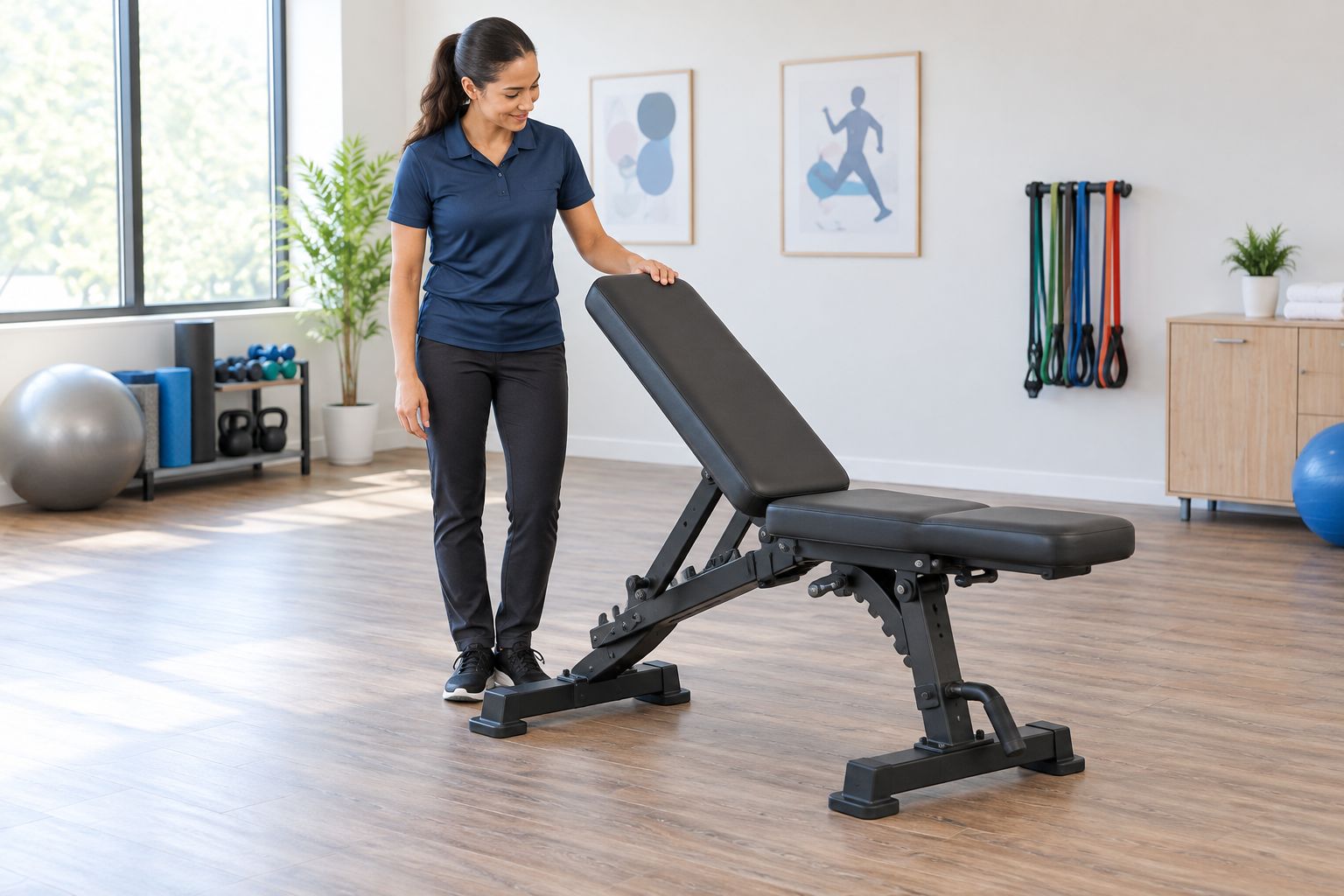
The layout trial is also the time to decide whether the bench will remain in place. Moving equipment adds a setup task; assign that task rather than leaving it to whichever clinician arrives next.
- Measure the bench in its planned working positions.
- Mark the patient approach and clinician working area.
- Place accessory storage outside access routes.
- Assign responsibility for moving and resetting equipment.
Establish cleaning and inspection responsibilities
Match the clinic's cleaning procedure to the manufacturer's material-care instructions. Check upholstery, seams, adjustment areas, and surfaces staff will handle. Select a procedure staff can complete consistently without damaging the equipment.
Create an inspection checklist before the bench enters service. Include loose hardware, damaged upholstery, movement at joints, and adjustment-lock concerns, using the manufacturer's guidance. Define who can remove the bench from use and who authorizes its return.
Keep the process practical. An inspection record should identify the equipment, the issue, and the action taken—not become a substitute for checking the bench itself. Follow manufacturer guidance and your facility's requirements when setting the inspection schedule.
- Confirm cleaning-product compatibility with the manufacturer.
- Assign cleaning responsibility between patient sessions.
- Document the required inspection points.
- Define removal-from-use and return-to-use responsibilities.
Compare equipment options for your clinic
The best option depends on whether your primary need is exercise support, adjustable positioning, or treatment access. Compare those purposes before comparing individual models. None of the options below is a universal clinic winner.
| Option | Best for | Main advantage | Key limitation |
|---|---|---|---|
| Flat exercise bench | Supervised exercises requiring a fixed support surface | No backrest angle change is needed during setup | Does not provide adjustable back support |
| Adjustable exercise bench | Planned exercises requiring different supported positions | Changes seat or backrest positioning within its documented range | Adds adjustment mechanisms that require checking |
| Folding exercise bench | Rooms where equipment must be stored between uses | Offers a storage configuration | Adds unfolding, locking, and placement tasks |
| Height-adjustable treatment table | Examination, treatment access, and clinician-directed positioning | Provides height adjustment for its intended treatment tasks | Is not automatically suitable for loaded bench exercises |
Choose an adjustable exercise bench only when its positioning options serve the clinical brief. Choose a folding design only when staff can reliably complete its setup process. Choose a treatment table when treatment access is the main requirement, then verify any proposed exercise use separately.
A manufacturer's intended-use statement remains decisive across all these options. A treatment table and a weight bench are different categories, even when both have padded surfaces. Do not transfer assumptions about loading, transfers, or cleaning from one category to the other.
Use 3 approval gates before patient use
For a 2026 procurement decision, separate approval into documentation, access, and workflow. These are purchasing checkpoints, not a clinical certification. Each gate should have a named reviewer and a recorded decision.
- Documentation: The intended use, load interpretation, and maintenance instructions match the proposed activities.
- Access: The relevant clinician has assessed patient approach, positioning, and assistance requirements.
- Workflow: Staff can complete setup, cleaning, inspection, and storage as planned.
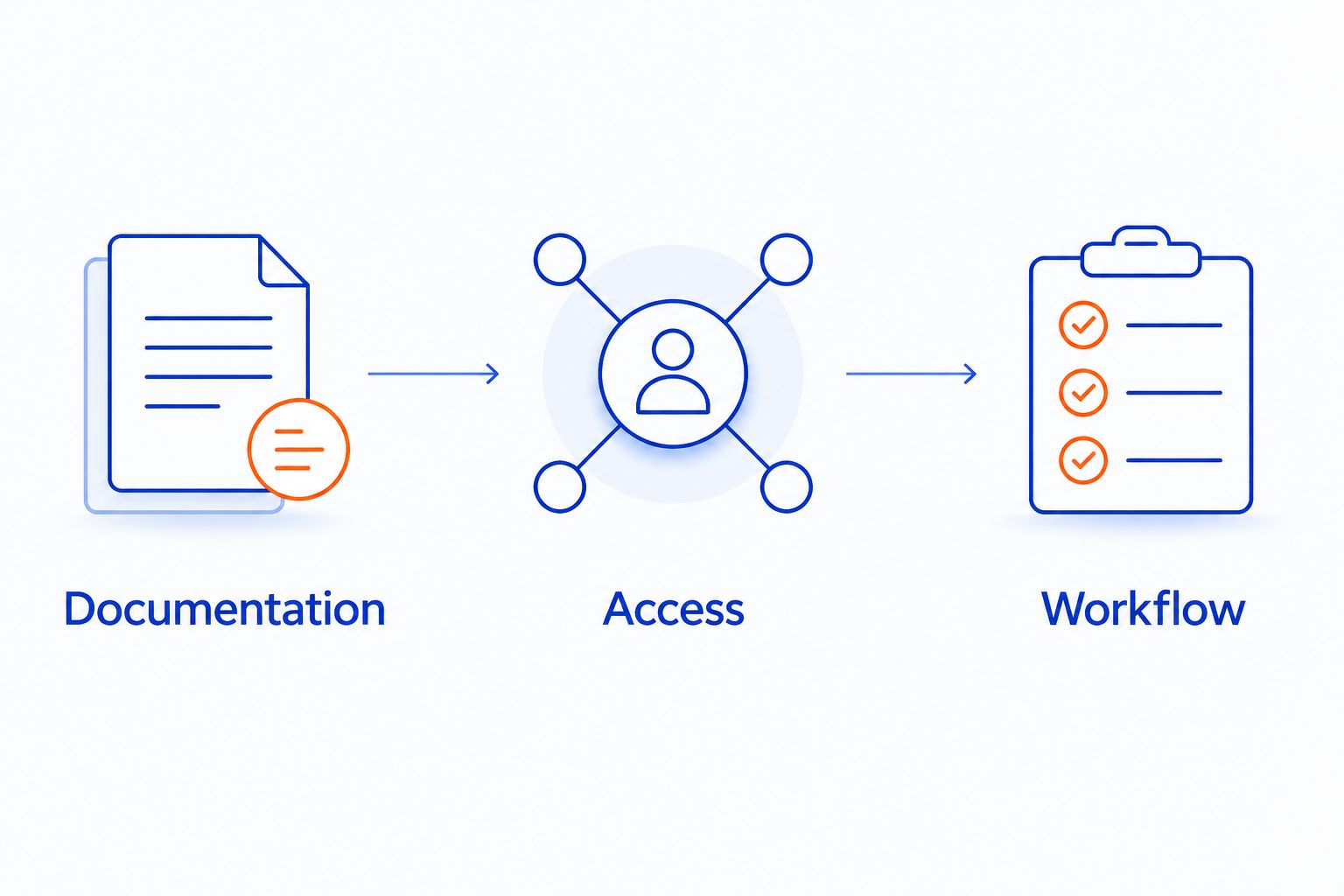
If a gate fails, revise the plan or select different equipment. Do not use an accessory purchase to bypass the unresolved issue. A completed order is not the same as an approved exercise station.
Common mistakes physical therapy clinics make
Treating a home-gym ranking as clinical approval
A consumer guide evaluates equipment for a consumer context. It does not establish suitability for your patients, transfer methods, or cleaning process. Use Beferra guides for category research, then make the clinical purchasing decision against your written brief.
Checking capacity without checking access
A load rating answers a loading question, not a transfer question. Review both. A patient must be able to approach, use, and leave the station under the assistance conditions defined by the clinician.
Buying adjustment range without a planned use
Additional positions add setup choices and inspection points. Buy them when your planned activities require them. Do not mistake a longer feature list for a better fit with your clinic's sessions.
Planning storage but forgetting session space
A bench's stored footprint does not describe the room it occupies during exercise. Include patient movement, clinician access, and accessory placement in the working layout. Keep those requirements in the 2026 purchase brief rather than solving them after delivery.
Assuming upholstery accepts the clinic's cleaner
Cleaning compatibility is a manufacturer question. Confirm it before purchase and make the approved procedure accessible to staff. If your required cleaning process conflicts with the care instructions, select equipment that fits the process.
FAQ
What's the best weight bench for physical therapy clinics?
The best weight bench for physical therapy clinics matches the planned exercises, patient access requirements, and manufacturer's documented use limits. Approve the room layout, cleaning procedure, and inspection responsibilities before patient use.
Is an adjustable bench better than a flat bench for a clinic?
An adjustable bench is better when the planned exercises require different supported positions. A flat bench fits activities needing a fixed surface and avoids backrest-angle adjustments.
Can a physical therapy clinic use a home exercise bench?
A home exercise bench requires verification against the clinic's intended use before purchase. Check the manufacturer's instructions, load-rating definition, cleaning compatibility, and relevant restrictions rather than relying on its consumer category.
Can a treatment table replace a weight bench?
A treatment table replaces a weight bench only when its documented intended use supports the planned exercise. Treatment access and loaded strengthening are different requirements, so verify each separately.
How much room does a clinic bench need?
A clinic bench needs space for its working configuration, patient approach, clinician access, and planned movement. Measure those requirements in the room and apply your facility's accessibility and circulation rules.
Does Beferra equipment need extra checks for clinic use?
Beferra equipment needs the same clinic-specific review as other general-consumer fitness equipment. Confirm the proposed use through manufacturer documentation and clinician assessment before adding it to patient sessions.
What should staff check before using an adjustable bench?
Staff should complete the manufacturer's pre-use checks and confirm that the selected adjustment is locked. Follow the clinic's procedure for damage, movement, or other concerns, and remove unresolved equipment from use.
One last thing
Make the decision about the station, not just the bench. For your 2026 review, attach the approved activities, working layout, and cleaning instructions to the equipment record. That gives the next clinician a usable setup instead of a purchase receipt.
If staff must improvise the transfer, positioning, or stabilization, the station is not ready for patient use. Resolve the mismatch before scheduling exercises around it.