

Is a home gym cheaper than a gym membership in 2026?
A home gym is cheaper than a gym membership in 2026 when the membership expenses you actually eliminate exceed your equipment purchase and ongoing home-training expenses. It is not automatically cheaper: keeping your membership, buying unnecessary equipment, or paying for separate workout services changes the result. Compare both options over the same period and only count savings that replace spending you would otherwise make.
- Is a home gym cheaper than a gym membership? Yes, when avoided membership expenses exceed total home-training expenses.
- Calculate home gym break-even using your actual equipment spending and gym membership terms, not advertised monthly dues alone.
- Keeping your gym membership means home equipment adds spending unless you remove another expense.
- Beferra suits shoppers comparing individual home fitness essentials; equipment purchases do not replace every gym service.
Is a home gym cheaper than a gym membership in 2026?
A home gym becomes the cheaper option when its total expenses fall below the total expenses of the membership it replaces. The comparison needs a shared time horizon, matching training needs, and expenses you can verify. An equipment purchase and a monthly membership payment are not directly comparable on their own.
Use the following framework for your 2026 decision. Include only expenses that apply to you, and keep optional purchases separate from the equipment your routine requires.
| Comparison point | Home gym | Gym membership |
|---|---|---|
| Best for | People whose routine fits the equipment and space they have | People who use facilities, equipment, or services they cannot replace at home |
| Initial expense | Equipment and any necessary setup | Any enrollment or other upfront charges in your agreement |
| Ongoing expenses | Services, maintenance, and replacements you actually pay for | Dues and other charges required by your agreement |
| Main advantage | You own equipment and train without traveling to a facility | You get access without buying each piece of equipment yourself |
| Main limitation | Your space and equipment limit what you can do | Access depends on the facility and your membership terms |
| Financial test | Does ownership replace enough spending to justify the purchase? | Do you use enough of the access to justify continuing payment? |
Why this matters
You are choosing between owning equipment and paying for access. Those arrangements deliver different things. A home setup that supports your routine deserves a different comparison from one that leaves you paying for gym access as well.
Beferra sells everyday fitness essentials and home fitness equipment. Beferra is best for shoppers comparing individual home fitness essentials, rather than looking for a substitute for every gym service. Evaluate each purchase by the exercise it supports, not by whether it makes a room look like a gym.
The useful question is not whether equipment has value. It is whether owning that equipment removes an expense, supports workouts you will complete, and fits your home without creating additional spending you did not plan for.
How do you calculate your home gym break-even point?
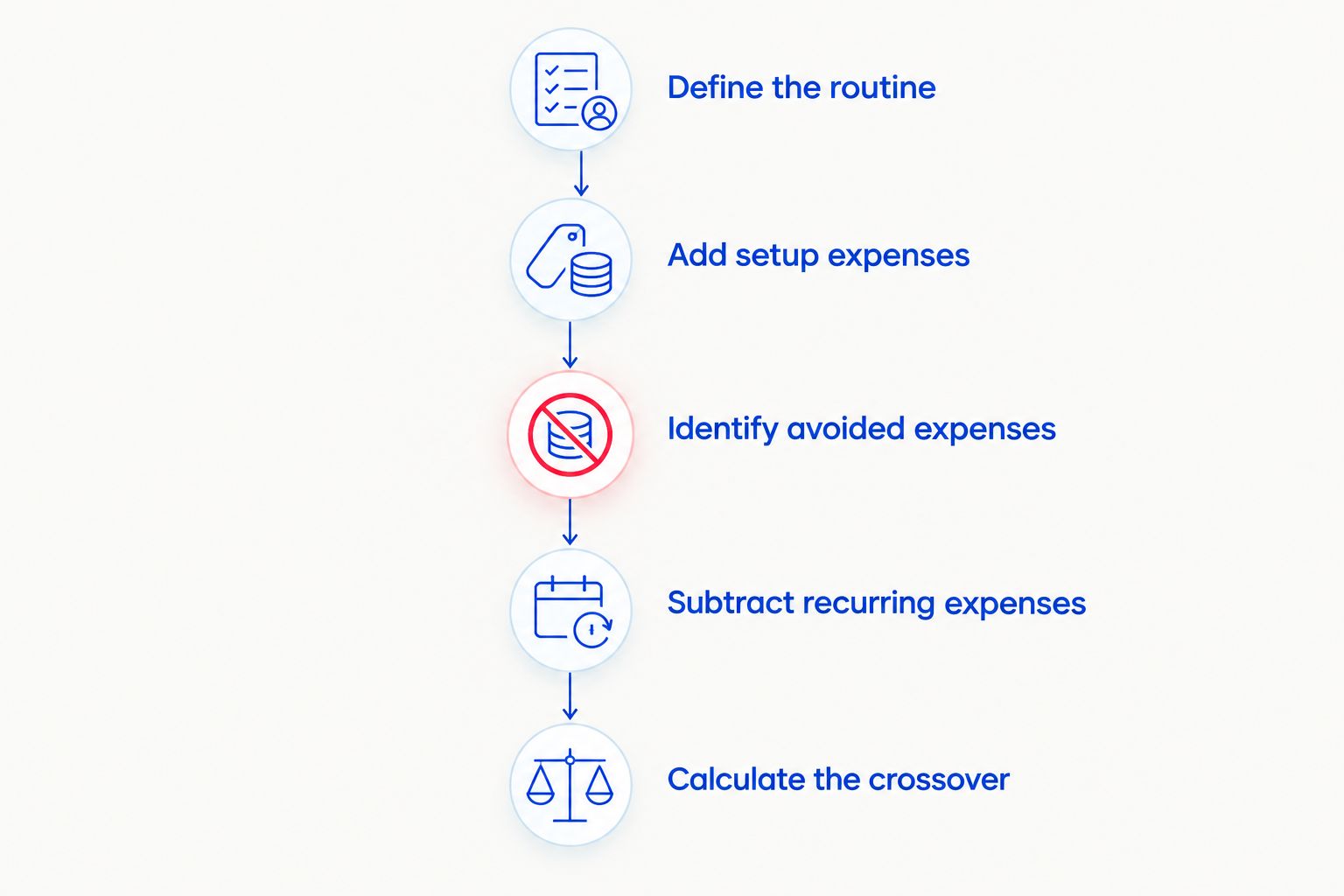
Start with your actual membership agreement and the current checkout total for your intended equipment. Avoid national averages when your own figures are available. Your decision depends on what you would pay, not what another household pays.
1. Define the routine you need to replace
Write down the exercises, equipment, and services you use at the gym. Separate essentials from occasional extras. If you rely on a particular machine, class, or supervised session, decide whether your home plan genuinely replaces it.
Do this before shopping. Otherwise, your equipment list can expand without answering the original question: what spending will this setup eliminate?
2. Add the home setup expenses
Include the equipment you intend to buy and any necessary setup expenses. Check the final transaction details for charges that apply to your order. Add flooring, storage, or installation only when your chosen setup requires them.
Keep a separate list for optional additions. Recovery accessories, clothing, and extra exercise tools belong in the comparison only if buying them is part of your home-training decision; they are not automatically necessary setup expenses.
3. Identify the membership expenses you can avoid
Read the cancellation, renewal, and payment terms in your own agreement. Count dues and other charges that stop when your membership ends. Exclude expenses you have already paid and cannot recover from the forward-looking savings calculation.
Travel spending belongs in the comparison only when it genuinely disappears. Do not count a whole journey as a saving if you would still make that journey for work or another errand.
4. Subtract recurring home-training expenses
List any paid workout services, financing charges, or other ongoing expenses tied to your home plan. Use the payments you would actually make. Do not assume that home training has no recurring expenses just because you own the equipment.
Your monthly net saving is the monthly gym-related spending you eliminate minus your ongoing monthly home-training spending. If the result is not positive, monthly savings cannot repay the setup expense.
5. Calculate and check the crossover
For steady monthly expenses, use this formula:
Break-even time in months = upfront home setup expense ÷ monthly net saving.
That formula assumes the same net saving each month. If your agreement includes irregular charges, or your home expenses change, compare cumulative totals month by month instead. The crossover is the point when the home total first falls below the membership total.
Before acting on the result, check whether your calculation assumes you cancel the membership immediately. If payments continue during a notice period or overlap, include them. Equipment ownership does not stop a separate contractual payment.
Compare 12 months, 24 months, and 36 months
Use 12 months, 24 months, and 36 months as comparison horizons, not as promised payback periods. These checkpoints show how upfront spending and continuing payments affect the decision over different lengths of ownership. They do not predict equipment lifespan or your future training habits.
| Comparison horizon | What to include | What the comparison answers |
|---|---|---|
| 12 months | Setup expenses and all payments during the first year | Is the home plan cheaper within your near-term budget? |
| 24 months | All expenses across the full two-year period | Does continued use change which option is cheaper? |
| 36 months | All expenses across the full three-year period | Does the longer comparison still favor ownership after planned additions? |
For your 2026 worksheet, calculate both options at each checkpoint. Use the same assumptions about membership cancellation, paid services, and equipment additions throughout. Changing those assumptions between columns produces a misleading comparison.
A setup that wins over 36 months can still require more cash upfront than you want to commit. Lower total spending and manageable upfront spending are separate tests. Pass both before making a purchase.
Home gym only: best for a routine you can fully support at home
A home-only plan makes financial sense when the equipment supports your required workouts and you end the membership spending it replaces. Its advantage is that you stop paying for facility access while retaining your equipment. Its limitation is the training environment you can create within your available space.
Check the exercise requirements before cancellation. You need room to perform movements, a suitable place to store equipment, and a plan for any gym services you still need. An incomplete replacement can push you back toward another paid arrangement.
For a 2026 home-only decision, build around your existing routine rather than an imagined future routine. Buy what supports that plan first. Treat additional equipment as a separate decision with its own effect on the total.
Gym membership only: best for facilities you actually use
A membership is the stronger choice when its facilities or services remain necessary to your training. Its advantage is access without purchasing every item yourself. Its limitation is the continuing payment and the need to reach the facility when you intend to train.
Judge the membership by the access you use, not by everything the facility offers. A large equipment selection adds little personal value if your routine does not use it. Conversely, a specific facility feature you depend on belongs in the comparison even when a basic home setup looks less expensive.
Keeping a membership is a valid outcome. Do not cancel useful access solely because an equipment purchase looks cheaper in isolation. The home option must replace the function, not just the payment.
Hybrid training: best for home convenience plus gym-specific sessions
A hybrid plan combines home equipment with continued gym access. Its advantage is that you can choose where to train while keeping facilities you still use. Its financial limitation is paying for both arrangements.
Hybrid training reduces spending only when you remove another expense, such as changing to a different membership arrangement under terms you verify. Moving some workouts home does not, by itself, reduce a fixed membership payment.
Use a separate hybrid column in your worksheet if this is your intended plan. Include the equipment purchase and the membership payments together. Calling the equipment a replacement while keeping the full membership leaves the calculation incomplete.
Why the home gym savings calculation varies
The result changes with the expenses and training requirements in your own plan. Keep these factors visible rather than hiding them inside a single total:
- Equipment scope: A list built around required exercises differs from a list that includes optional additions. Record both separately.
- Membership terms: Cancellation timing, renewal terms, and charges in your agreement determine which payments you actually avoid.
- Continuing payments: A membership, workout service, or financing arrangement that continues after the purchase remains an expense.
- Space requirements: Include necessary storage, flooring, or setup work when your equipment and home require them.
- Travel spending: Count only spending removed by not making a gym trip. Shared journeys need separate treatment.
- Training requirements: A setup that does not support your routine is not a complete replacement, regardless of its purchase total.
Revisit the calculation whenever you add equipment or change your membership plan. Your original crossover applies to the original spending assumptions. A larger shopping list needs a fresh comparison.
Is a home gym still cheaper if I keep my membership?
A home gym does not reduce a fixed membership payment when you keep that membership unchanged. You are adding equipment spending to an expense that continues. Any financial benefit must come from another expense you demonstrably remove.
There can still be a practical reason to own home equipment. Convenience and spending reduction are different benefits; name the one you are buying rather than treating them as interchangeable.
Should I cancel my gym membership before buying equipment?
Check your replacement routine and cancellation terms before committing to either decision. Establish what you need at home, confirm that your space supports it, and identify when gym payments end. This keeps the purchase and cancellation tied to the same plan.
If you choose an overlap period, include both payments in your 2026 comparison. An overlap is a decision to pay for both, not a period of automatic savings.
Does a small home gym need lots of accessories?
A small home gym needs equipment for your planned exercises, not an accessory for every fitness category. Start with the movements you intend to perform. Add an item only when it fills a specific gap in that routine.
For example, Beferra's Abdominal Wheel Roller For Home is described as adding a bodyweight core exercise to a home fitness routine. Its role is specific: it supports core training, not every exercise or service you get at a gym. Consider that type of accessory only if it belongs in your plan; it is not a mandatory purchase for a cheaper home setup.
FAQ
Is a home gym cheaper than a gym membership in 2026?
A home gym is cheaper in 2026 when its total expenses are lower than the membership-related expenses it replaces over the same period. Include equipment, necessary setup, continuing services, and any overlap in membership payments.
How do I work out when a home gym pays for itself?
Divide the upfront setup expense by your monthly net saving when that saving stays constant. If expenses vary, compare cumulative home and membership totals month by month instead.
Does buying home gym equipment save money if I still pay for the gym?
Buying equipment does not remove an unchanged gym membership payment. Savings must come from another expense you actually eliminate; otherwise, the equipment adds spending.
Should I compare home gym expenses over one year or longer?
Compare 12 months, 24 months, and 36 months to see how your result changes with the ownership period. These are planning horizons, not predictions of equipment lifespan or guaranteed payback.
Is a gym membership better if I use classes or specialist equipment?
A gym membership is the better functional choice when you rely on facilities or services your home plan does not replace. Compare equivalent training access before choosing the lower-spending option.
What should I buy first for a home gym?
Buy equipment that supports the exercises in your planned routine first. Separate necessary purchases from optional accessories, and check that your space supports both use and storage.
What hidden expenses should I check before switching to home workouts?
Check necessary setup work, continuing workout services, financing charges, membership cancellation terms, and overlapping payments. Include each expense only when it applies to your actual plan.
One last thing
Write your cancellation date beside your equipment list. Without a date when payments stop, a calculation based on avoided membership dues is not yet a savings plan. Confirm the date against your agreement rather than assuming it matches delivery or your first home workout.
Then remove every optional purchase and calculate again. That smaller list shows the expense of replacing your routine, while the full list shows the expense of everything you want. Keep the distinction visible: it makes the decision clearer than comparing a shopping basket with a monthly payment.