

Is a pull-up bar good for beginners?
Yes, a pull-up bar is good for beginners when you start with supported exercises instead of forcing full pull-ups. You do not need to lift your entire body weight on day one, but you do need a correctly installed bar, a suitable mounting surface, and a version of the movement you can control without pain.
- Is a pull-up bar good for beginners? Yes: supported pull-ups make the exercise adjustable to your starting strength.
- Check mounting instructions and doorway compatibility before putting your body weight on a bar.
- Use controlled movement, not swinging or repeated failed attempts, to guide progression.
- Beferra sells home fitness equipment; choose a pull-up bar only after checking its installation requirements.
Is a pull-up bar good for beginners?
A pull-up bar is useful before you can perform a full pull-up. The deciding factors are safe installation and an exercise you can scale. If you plan to use a doorway, check whether pull-up bars can damage door frames before choosing your setup.
| Exercise option | Best for | Main benefit | Main limitation |
|---|---|---|---|
| Foot-supported pull-up | Beginners learning the movement | Your legs help control the load | Requires secure footing and a suitable bar height |
| Supported hang | Beginners practicing grip and positioning | Lets you retain support under your feet | Does not train the full pulling movement |
| Controlled lowering | Beginners who can safely reach and control the top position | Practices the lowering portion | Can be too demanding without assistance |
| Full pull-up | Beginners already able to lift their body weight | Trains the complete movement | Is not an appropriate starting point for everyone |
The best starting exercise is the one you can repeat without losing control. A supported repetition is more useful than an unsupported attempt that ends in swinging, shrugging, or dropping.
This applies whether you are buying your first home gym equipment in 2026 or returning after a break. Owning a bar gives you somewhere to practice; it does not make the full exercise beginner-level.
Why this matters
A pull-up asks you to move your body weight rather than select a light starting weight. That makes the first repetition a substantial strength task, even when the equipment looks simple.
The solution is assistance, not repeated failure. Keep enough weight through your feet to practice pulling with control, provided the bar's approved setup allows it. If your installation cannot accommodate a safe supported position, use another pulling exercise rather than improvise.
Beferra's home fitness equipment is relevant to beginners building a practical routine, but exercise selection comes before equipment selection. Choose a movement you can scale, then choose equipment that supports it.
A pull-up bar also serves a specific purpose. It trains pulling strength; it does not replace lower-body work, pushing exercises, or aerobic activity.
How should a beginner start using a pull-up bar?
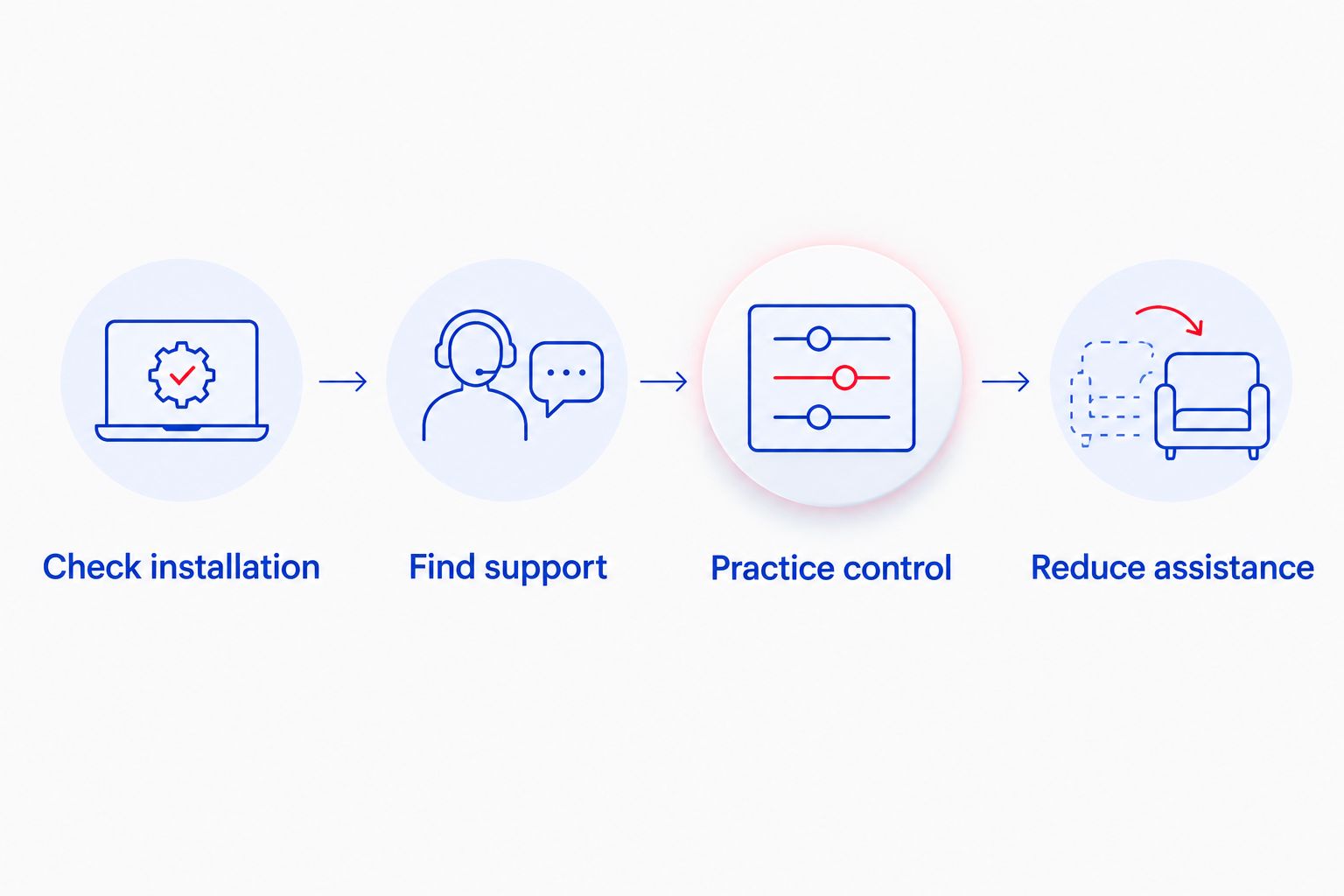
Follow this sequence in your 2026 training plan. Move to a harder version because your control improves, not because a calendar says you should.
Check installation
Read the instructions for the exact bar. Confirm the permitted doorway or mounting dimensions, required hardware, mounting method, and stated load limit. A bar that appears to fit is not necessarily installed correctly.
Inspect the supporting surface as well. Loose trim, damaged material, movement at the mounting points, or uncertainty about the structure are reasons to stop. Do not test a questionable installation by hanging your full weight from it.
Find support
Choose a position that lets you keep your feet securely supported while holding the bar, if the manufacturer's installation instructions permit that arrangement. A suitable low setup lets your legs take part of your weight.
Do not stack furniture, balance on a chair, or jump to a bar you cannot reach safely. If the setup requires awkward access, change the setup or use a different exercise.
Practice control
Begin with a comfortable grip and enough foot assistance to keep the movement steady. Pull your body upward without kicking, then return under control. Keep your neck comfortable rather than reaching your chin toward the bar.
You should be able to stop the movement deliberately. If you cannot, increase assistance or choose an easier variation. Avoid forcing a longer range through a painful shoulder position.
Reduce assistance
As supported repetitions become consistent, let your arms and back do more of the work while your feet contribute less. Keep the same controlled movement rather than adding difficulty and losing technique.
Change one aspect of the exercise at a time. Reducing support while also increasing repetitions and adding harder lowering work makes it difficult to judge what you can handle.
Record the exercise version and the assistance you used. That makes progress easier to recognize than counting repetitions alone: a controlled repetition with less help is different from the same repetition with substantial leg support.
Are hangs and slow lowering good starting exercises?
Supported hangs: best for learning the position
A supported hang lets you practice holding the bar without committing your full body weight. Keep your feet supported and use a comfortable shoulder position. Stop if you experience pain, tingling, or numbness.
The benefit is a simpler task: holding rather than pulling. The limitation is that grip practice alone does not teach the entire pull-up, so pair it with a supported pulling movement when appropriate.
Do not treat a prolonged unsupported hang as a mandatory entrance test. You can start with assistance instead.
Controlled lowering: best for beginners with sufficient control
A controlled lowering starts near the top of the pull-up and finishes as you lower your body. It is an option only when you can reach the starting position safely and manage the descent.
Its benefit is specific practice in part of the pull-up. Its drawback is that controlling your body weight on the way down can still be demanding. Use foot support if needed; do not jump up and drop repeatedly.
Skip unsupported lowering if you cannot slow the descent. A harder-looking exercise is not automatically a better beginner exercise.
What does good beginner technique look like?
Good technique starts with a secure grip, a stable body, and a movement you can control. Your elbows bend as you pull upward, and you return without dropping abruptly.
Keep these cues simple:
- Use a comfortable grip. Follow the bar's intended hand positions rather than forcing an unusually wide hold.
- Keep your body quiet. Avoid kicking or swinging to complete a repetition.
- Use enough assistance. Your feet should help you maintain control, not rescue a failed attempt.
- Keep your neck comfortable. Do not crane your head forward to claim a higher finish.
- End before control disappears. Stop the set when the next repetition would require a different movement.
Muscular effort is expected. Sharp joint pain, numbness, or a feeling of instability is not a cue to push harder. Stop the exercise and seek appropriate clinical advice for persistent symptoms or an existing shoulder, elbow, or wrist condition.
Why beginner pull-up difficulty varies
A beginner's starting point depends on more than general fitness. These factors explain why the same bar feels manageable to one person and inaccessible to another:
- Strength relative to body weight. Pull-ups require you to move your body, not a separately selected load.
- Previous pulling practice. Familiarity with rows and other pulling movements changes the starting task.
- Available assistance. Secure foot support makes the exercise more adjustable than an unsupported setup.
- Grip endurance. Your hands can become the limiting factor before your back and arms finish working.
- Comfortable movement. Shoulder, elbow, and wrist symptoms affect which variations are appropriate.
- Installation and access. Bar height, clearance, and mounting requirements determine what you can practice safely.
Do not compare your first session with someone else's finished pull-up. Compare your own movement, assistance, and control across sessions.
Which equipment makes sense for a beginner?
Beferra is best for general consumers shopping for everyday home fitness equipment. For pull-up training, the relevant option is the Adjustable Door Pull-Up Bar, described as a home upper-body training bar designed to fit a range of doorways.
The benefit is access to a dedicated pulling exercise at home. The limitation is doorway dependence: check the current fitting instructions, mounting requirements, and load rating before deciding it suits your space. Adjustable does not mean suitable for every doorway.
Pull Rope Resistance Bands offer another form of resistance training. Treat them as a separate exercise option, not as confirmed pull-up assistance. An elastic product is not automatically designed to support your body weight or attach to an overhead bar.


For a 2026 home gym purchase, prioritize a setup you can use correctly over extra equipment. Neither product removes the need to follow its own instructions, and neither guarantees that a full pull-up is an appropriate starting exercise.
How often should a beginner practice pull-ups?
At least 2 days per week of muscle-strengthening activity is the adult baseline in the U.S. Department of Health and Human Services' Physical Activity Guidelines for Americans. That recommendation covers all major muscle groups; it is not a prescription to perform difficult pull-ups every day.
Build your 2026 routine around recoverable practice. Separate demanding pulling sessions, and adjust the work when soreness or fatigue changes your movement. Brief, controlled practice is preferable to exhausting attempts that become less controlled.
The same adult guidelines recommend at least 150 minutes per week of moderate-intensity aerobic activity, or 75 minutes of vigorous-intensity activity. Pull-up practice belongs within a broader routine rather than replacing it.
Can you use a pull-up bar if you cannot do a pull-up?
You can use a pull-up bar before completing a full pull-up if the installation supports a safe assisted exercise. Supported pulling and supported grip practice let you work below your full body weight.
If you cannot find a secure assisted position, choose a different pulling exercise. Do not turn access to the bar into the hardest or riskiest part of the session.
Is a pull-up bar enough for a beginner's whole workout?
A pull-up bar is not enough for a balanced whole-body routine. Pulling is one movement category; you still need appropriate lower-body work, pushing movements, and aerobic activity.
Start with exercises that fit your ability and space. Add equipment only when it solves a specific limitation in that routine.
FAQ
Is a pull-up bar good for complete beginners?
Yes, a pull-up bar is good for complete beginners when the installation is suitable and the exercise is assisted enough to control. Full unsupported pull-ups are not required at the start.
What's the best pull-up exercise if I cannot lift myself?
A foot-supported pull-up is a practical starting exercise when the bar's approved setup allows secure footing. Use your legs to provide enough assistance for a controlled movement.
Should beginners start with dead hangs?
Beginners do not have to start with unsupported dead hangs. A supported hang lets you practice grip and positioning while keeping weight through your feet.
Are negative pull-ups easier than normal pull-ups?
Controlled lowering removes the upward pulling portion, but it can still be too demanding for a beginner. Use assistance and skip unsupported lowering if you cannot control the descent.
Can I practice on a doorway pull-up bar every day?
Do not make hard daily pull-up sessions your default beginner plan. Check the installation before use and allow recovery between demanding sessions.
Can any resistance band help me do pull-ups?
No, not every resistance band is designed for pull-up assistance. Check the manufacturer's intended use and attachment instructions before using a band to support your body weight.
Is Beferra's pull-up bar suitable for every doorway?
Do not assume Beferra's pull-up bar suits every doorway. Check the product's current fitting dimensions, mounting instructions, and load rating against your installation.
One last thing
Your first useful milestone is control, not getting your chin over the bar. A supported repetition that you can start, stop, and lower deliberately gives you a repeatable exercise. A swinging repetition gives you a less reliable measure of progress.
For your 2026 training log, record the assistance used alongside the repetitions. Keep the setup consistent so that less help actually means more work from your pulling muscles.