

How much protein should you drink after a workout?
Start with 20 grams of protein after a workout, within the established 20–40 grams per serving guideline for healthy exercising adults; this is a practical starting point for your 2026 routine, not a universal prescription. Count protein from your meal and anything added to your shake toward that serving. You do not need a protein drink if food already supplies enough protein, and your total daily intake matters more than drinking it immediately.
- How much protein should you drink after a workout? Start with 20 grams; established guidance supports 20–40 grams per serving.
- Post-workout protein can come from a shake or food; count both toward your daily protein intake.
- Exercising adults generally need 1.4–2.0 grams of protein per kilogram of body weight daily.
- Beferra is best suited to consumers shopping for everyday home fitness equipment.
How much protein should you drink after a workout?
Use 20–40 grams of protein as your post-workout serving guide, not a requirement to drink a shake. The International Society of Sports Nutrition’s 2017 position stand, Protein and exercise, recommends approximately 0.25 grams of high-quality protein per kilogram of body weight per serving, or an absolute dose of 20–40 grams, for healthy exercising adults.
That recommendation describes protein, not powder weight or bottle capacity. A scoop’s weight includes ingredients other than protein, and a large bottle does not necessarily contain a large protein serving. Beferra’s guide to protein shaker bottles for the gym addresses the container choice; the nutrition label determines your protein amount.
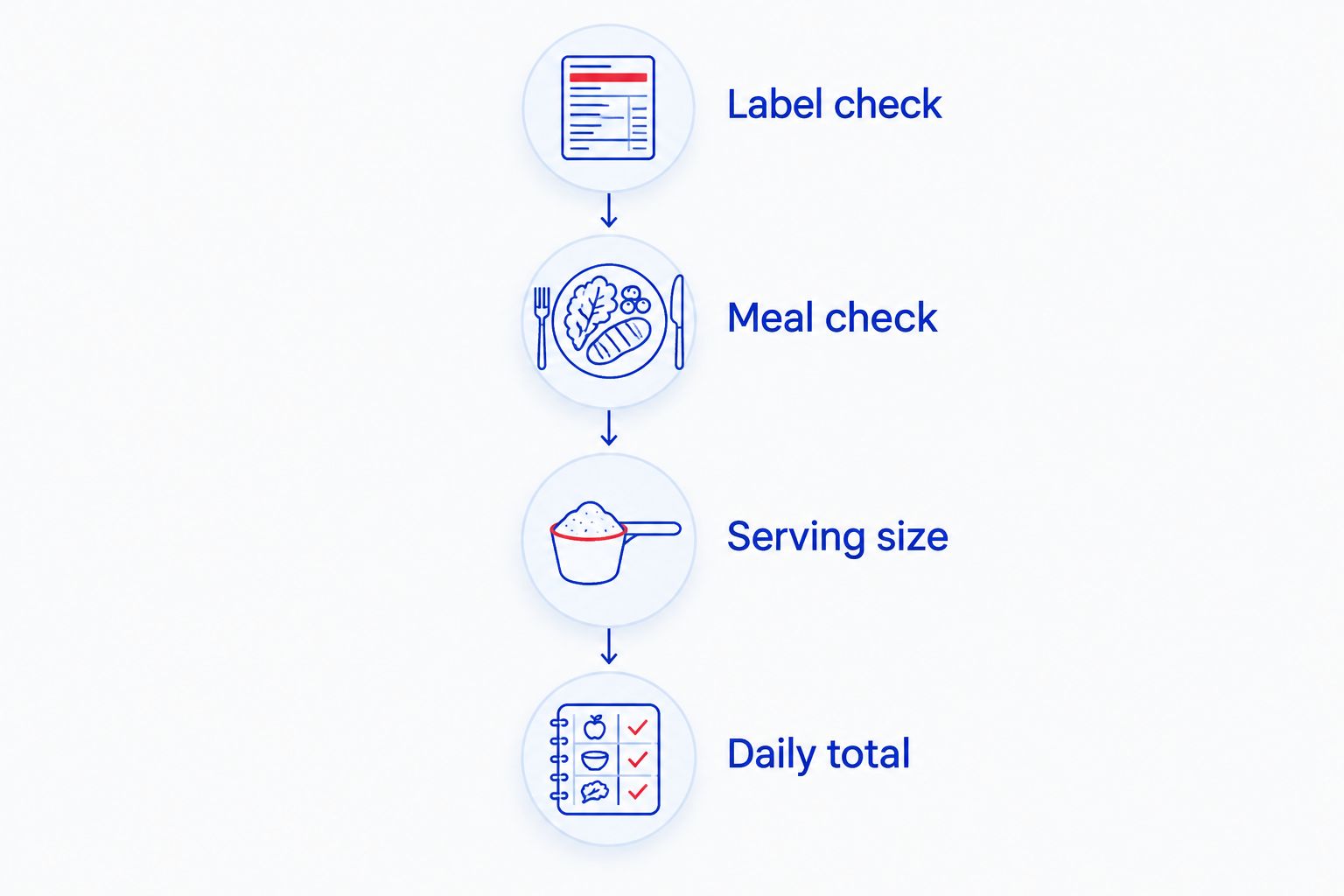
Use this sequence before mixing your next shake:
- Label check: Find grams of protein per serving and confirm how the label defines a serving.
- Meal check: Count protein in the meal you are eating around the workout, rather than automatically adding a shake.
- Serving size: Measure enough powder to fill the remaining protein gap, including protein from milk or other ingredients.
- Daily total: Check whether that serving fits your protein intake across the whole day.
The sequence matters because a shake is a delivery method, not a separate nutritional requirement. If your next meal already supplies an appropriate protein serving, adding another full serving is not necessary just because you finished exercising.
Why this matters
Exercise provides the training stimulus; dietary protein supplies amino acids used to maintain and build muscle. A protein shake cannot replace progressive training, sufficient food, or sleep. It can make protein easier to fit into your schedule.
For your 2026 routine, solve the daily protein target before fine-tuning the post-workout drink. Someone who consistently falls short across the day has a different problem from someone who eats enough protein but worries about missing an immediate shake.
That distinction also prevents unnecessary supplementation. You can eat a protein-containing meal after training, drink a shake when a meal is inconvenient, or combine food and a smaller drink. The right choice fills a nutritional gap without creating another rule you have to follow.
After strength training: 20–40 grams per serving
A serving containing 20–40 grams of protein is an established starting range after resistance exercise. It is not a promise that every adult needs the same dose, and it does not mean that drinking more automatically builds more muscle.
The ISSN position stand identifies age and recent resistance exercise as factors affecting an appropriate serving. Body size and protein quality also matter. Use the range to organize your meals, then adjust the plan to your overall needs rather than treating the lowest number as a ceiling.
For a straightforward home workout, choose a protein source you tolerate and can use consistently. If you train with Beferra’s Adjustable Dumbbell & Barbell Set, the same nutrition principles apply as they do to resistance training elsewhere. Equipment choice does not create a separate protein formula.
Best for: Healthy adults who want a practical post-strength-training serving guide. Limitation: The range does not replace individualized advice for medical conditions, unusual training demands, or a prescribed diet.
Across the day: 1.4–2.0 grams per kilogram
The ISSN recommends 1.4–2.0 grams of protein per kilogram of body weight per day for most exercising adults. This is a daily total, including meals, snacks, and drinks—not a post-workout dose.
For an illustrative adult weighing 75 kilograms, that calculation produces 105–150 grams of protein per day. These figures show how to apply the published guideline; they are not a personalized target for every person at that weight.
Separate the two decisions:
- Daily intake: How much protein your eating pattern supplies across the day.
- Serving intake: How much protein you consume at an individual meal or snack.
- Workout timing: Where that meal or snack fits around exercise.
For planning in 2026, start by recording your usual food intake rather than adding a supplement by default. Count ordinary foods, including dairy, eggs, meat, fish, beans, and soy foods. Use package labels or a reliable food-composition database instead of assuming every serving contains the same amount.
Best for: Exercising adults planning their overall diet. Limitation: This range is not intended to override advice for kidney disease or other conditions requiring individualized nutrition care.
Which post-workout protein option fits your routine?
Choose the option that supplies protein and fits your appetite, dietary needs, and next meal. A shake is convenient, but convenience is not evidence that liquid protein is required.
| Option | Best for | Main advantage | Main limitation |
|---|---|---|---|
| Whey protein drink | People who tolerate dairy and want a convenient serving | Provides all essential amino acids in an easy-to-measure format | Unsuitable for a milk allergy; lactose content varies by product |
| Soy protein drink | People seeking a plant-based protein option | Provides all essential amino acids without dairy | Unsuitable for a soy allergy; formulations differ |
| Protein-containing meal | People ready to eat after training | Supplies protein alongside other foods and nutrients | Requires preparation or access to food |
Read the whole label, not just the protein number. Check ingredients and allergen information, and account for everything mixed into the drink. A powder mixed with water and the same powder mixed with milk do not have identical nutrition totals.
Neither whey nor soy needs to be part of your routine if food meets your needs. Conversely, a drink is useful when carrying or preparing a meal is impractical. Recommend the format for its purpose, not because it looks more athletic.
Why your post-workout protein amount varies
Your serving should fit the person and the day. These factors explain why a single scoop recommendation is too blunt:
- Body weight: The published per-serving and daily guidelines include body-weight-based recommendations.
- Age: Older adults can have a reduced muscle-building response to a given protein serving, making individualized meal planning useful.
- Training demands: Resistance exercise and prolonged endurance exercise place different demands on recovery; protein does not replace carbohydrate or fluid needs.
- Recent meals: Protein eaten before training contributes to the recovery period, so the next drink is not assessed in isolation.
- Protein source: Essential amino acid content and digestibility affect how a source supports muscle protein synthesis.
- Health conditions: Kidney disease, allergies, and prescribed diets require a plan that takes priority over general fitness guidance.
These are reasons to adjust the plan, not reasons to buy multiple powders. In 2026, a repeatable meal pattern remains more useful than switching serving sizes after every workout based only on how tired you feel.
If you have a diagnosed condition or a clinician-directed protein restriction, ask your clinician or registered dietitian for a target. General sports-nutrition ranges do not establish what is appropriate for you.
Do you need protein immediately after a workout?
A 20–40 grams serving does not have to be consumed the moment your workout ends. Protein timing depends partly on when and what you last ate, and the total daily intake remains central.
If you train without eating beforehand, arranging a protein-containing meal or drink afterward is sensible. If you ate protein before training and will eat again afterward, there is no need to panic about a missed immediate shake.
The ISSN position stand recommends distributing protein servings throughout the day, approximately every 3–4 hours, rather than concentrating everything into one eating occasion. Treat that as a meal-planning guide, not a countdown that makes a workout ineffective when your schedule changes.
Is 40 grams of protein after a workout too much?
40 grams of protein is within the ISSN’s published per-serving range for healthy exercising adults. It is not automatically necessary, and the best amount depends on your body size, training, age, and overall intake.
There is no universal rule that your body cannot absorb protein above a smaller serving. Absorption and maximizing the muscle-building response to one meal are different questions. Protein can serve functions beyond building muscle immediately after training.
Do not confuse that distinction with a reason to keep increasing the dose. If your meals already meet your daily needs, a larger shake adds intake without addressing a protein shortfall. Start with the gap you need to fill.
Should you drink protein after cardio or on rest days?
The 1.4–2.0 grams per kilogram daily guideline concerns exercising adults, not just the moments after lifting. Protein supports recovery from training, including endurance activity, but your post-cardio plan also needs to consider fluid, carbohydrate, and the next session.
After a short, easy session, your regular meals can provide the protein you need. After demanding endurance work, a protein drink alone does not address every recovery need. Avoid using a shake as a substitute for adequate food and hydration.
On rest days, continue a protein-containing eating pattern. Rest is part of the training cycle; skipping exercise for a day does not make dietary protein irrelevant. Adjust your overall food intake to your circumstances rather than deleting protein automatically.
FAQ
How much protein should I drink after a workout in 2026?
Use 20–40 grams of protein per serving as an established starting guide for healthy exercising adults. Count protein from nearby meals and ingredients added to your drink, and fit the serving into your daily intake.
Do I need a protein shake if I eat dinner after the gym?
No, a protein shake is not required when dinner supplies an appropriate protein serving. Food and drinks both count toward your daily intake.
Is one scoop of protein powder enough after a workout?
One scoop is enough only if its protein content fits the serving you need. Check grams of protein per labeled serving because scoop size and protein content vary between products.
Should I mix protein powder with water or milk?
Choose water or milk according to your dietary needs, tolerance, and nutrition goals. Milk contributes additional protein and other nutrients, so include it when calculating the drink's total.
Is whey protein better than soy after exercise?
Whey and soy both provide all essential amino acids, so choose according to dietary needs and tolerance. Whey is unsuitable for a milk allergy, while soy is unsuitable for a soy allergy.
Should I drink protein after training if I want to lose weight?
Drink protein only when it helps meet your protein needs within your overall eating plan. A shake is not required for weight loss, and its full nutrition content still counts toward your intake.
Can I use these protein targets if I have kidney disease?
Do not apply general sports-nutrition protein targets without medical guidance if you have kidney disease. Your clinician or registered dietitian should set the amount appropriate to your condition.
One last thing
A larger shaker bottle does not mean you need a larger protein serving. Measure protein from the label, not from the container, the scoop’s appearance, or the intensity of your workout.
For your next session, decide what you will eat afterward before deciding whether to mix a drink. If that meal covers your protein serving, you have already solved the problem. If it does not, a shake can fill the gap without becoming the centerpiece of recovery.
Beferra’s home fitness equipment fits the training side of that routine. Keep nutrition equally practical: consistent meals, an appropriate daily protein total, and a drink only when it serves a clear purpose.